
QuillBot is best known as a paraphrasing and grammar-checking tool.
Now the platform has been extended to include an AI detector and a humanizer. That mix shaped the main question of this QuillBot review: does QuillBot’s AI detector deserve the same trust as its other tools that so many students and writers already use? I put it through the test, which detected AI in 4 texts (3 written by AI using different prompts and 1 human-written article sourced externally). Note that in this test I used the premium version of the tool, so if you use the free version, you may see different results.
📢 A note on conflict of interest: GetSolved runs its own AI detection tool, which makes QuillBot a competitor to a product I write alongside. Even so, I assessed QuillBot solely on what appeared on screen, without any presumption against the tool, and I flagged every claim that came from the vendor.
This detailed review covers my test results, QuillBot’s pricing, what the toolkit does beyond detection, and a verdict split by who should use QuillBot and who should skip it. Specifically, I will answer the simple question: Can you trust the QuillBot AI detector?
So, let’s begin!
✅ QuillBot Review Quick Summary
QuillBot is a useful tool for rewriting and polishing text, with a paraphraser and an AI humanizer built right into the editor window. The detector was the weak point: an unedited Claude AI text scored 7% AI, and two complex AI-written scientific texts scored 0%. Prices run high next to single-purpose tools, though you pay for a full toolkit. Use QuillBot for paraphrasing and editing, and don’t treat its detector scores as proof of who wrote a text.
What Is QuillBot?
- QuillBot was founded in 2017 as a paraphrasing tool and later grew into a broader platform for AI writing and editing. The AI detector is the newest tool, introduced only in July 2024. So, QuillBot’s AI detector is a late addition to a product built around rewording, not a tool built around authorship analysis.
Most people discovered QuillBot through its paraphraser. Today, the platform offers a grammar checker, summarizer, plagiarism checker, citation generator, AI humanizer, and AI detector, as well as extensions for Chrome, Word, and Google Docs. Integrating these pieces into a single workspace provides its biggest selling point!
First Impressions: Interface and Free Plan
Right away, the primary advantage of convenience shows up the moment you paste text into the detector. Because the paraphraser and humanizer are installed in the same tool, you can rewrite a passage right in the window and check it again without opening another tab.
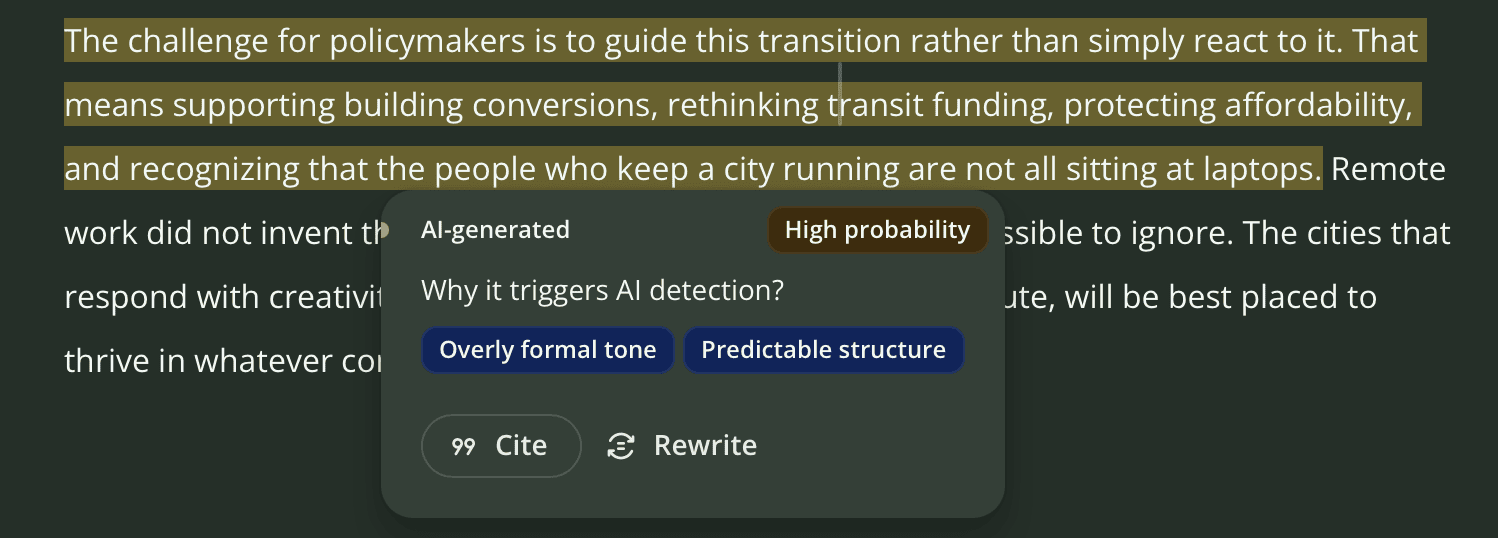

💰 Price: The free plan covers the detector, though with limits. On the free tier, users receive up to 7 scans daily, while Premium removes the cap. Free usage of the humanizer is tighter still: a 100-word limit a day.
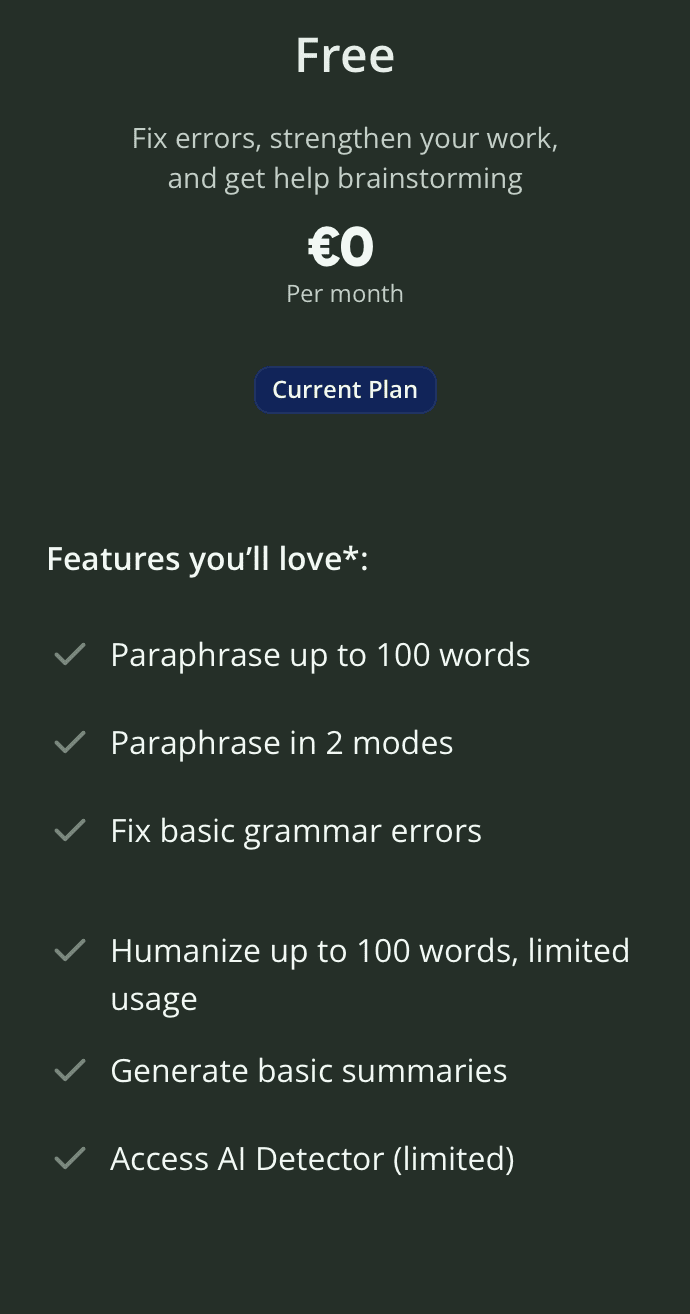

One oddity stood out. Curiously, the pricing window remains locked without an account, so you can’t see what QuillBot Premium costs unless you’re signed up. Honestly, that is a strange choice for a tool that wants you to try it for free first.
Here’s What QuillBot Offers Beyond Detection
🟪 Paraphraser. The core of QuillBot for paraphrasing is a rewriter with several modes, including Standard, Fluency, Formal, and Creative, plus a slider that controls how much the wording changes. For a side-by-side comparison, GetSolved’s own paraphrasing tool lets you rewrite the same passage and judge the output yourself. In practice, Fluency mode is the one to try first if your goal is smoother wording, since the more aggressive modes can swap normal words for clumsy ones. Treat the paraphrasing features as a revision aid: they improve writing quality when you already know what you mean, and they do little when the argument itself is weak.
🟪 Humanizer. QuillBot’s humanizer rewrites AI-sounding text so it reads as if a person wrote it. The free version offers a basic mode, and Premium adds an advanced one. To humanize AI text means changing word choice and rhythm until a passage no longer reads like machine output, and the QuillBot humanizer is built for exactly that. Any AI tool that rewrites text this way can move detector scores, which is why a single score proves little. Since I ran only the paraphraser, this is not a full QuillBot AI humanizer review.
🟪 Writing assistance. QuillBot also helps you check grammar and punctuation, and it points out the weak spots in a draft. I didn’t test it, so I can only report what others found: DIY AI is good for basic grammar and spelling fixes but less mature than Grammarly for live tone coaching. QuillBot’s grammar checking is a free tool in its basic form, and it is considered good enough to catch grammar mistakes before you submit a draft. A second pass through a standalone grammar checker shows whether the suggestions agree.
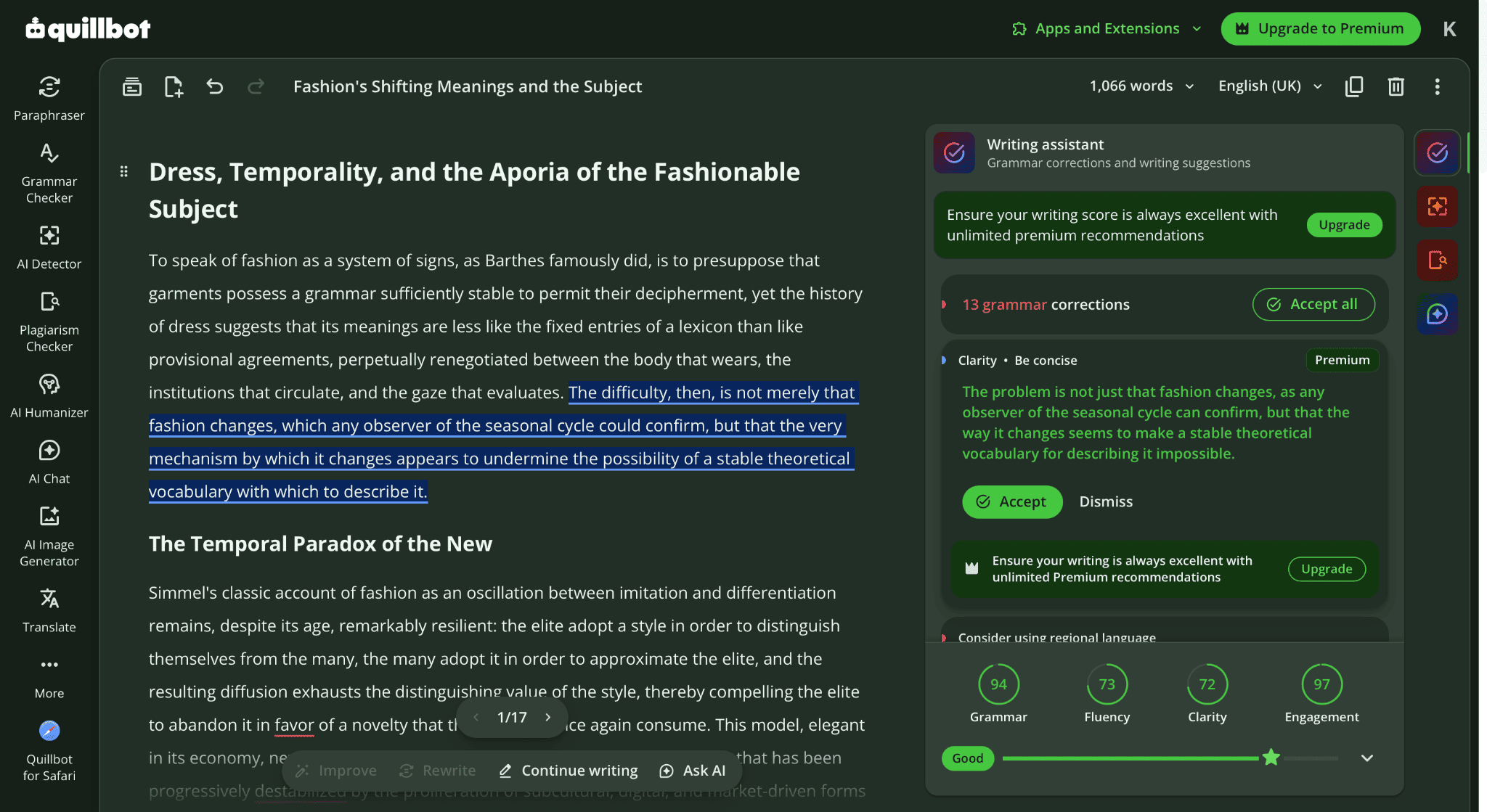
🟪 Everything else. The summarizer offers Key Sentence and Paragraph modes. Premium includes a plagiarism checker that highlights matches and links to sources, and the citation generator formats references. Keep in mind that plagiarism detection and AI detection answer different questions: one looks for overlap with existing text; the other estimates whether text was written by AI.
I Put QuillBot’s AI Detector Through 4 Tests
I ran four texts through QuillBot’s AI detector: three written by an AI tool and one human article from an outside source. Each test follows the same pattern of setup, result, and observation. I kept the prompts short and plain on purpose because that is how most people generate a quick draft. Also, I left the first text unedited so the detector would see the raw output.
Test 1: A Simple AI Text, Then Paraphrased
Setup: I asked Claude for a text with the prompt “write a text 1000+ words on which I can run a test of an AI detector” and pasted the output into QuillBot without a single edit. Then I ran the same text through QuillBot’s own paraphraser and checked it again.
🎯 Result: The unedited text scored 7% AI. After the paraphraser, the AI score dropped to 4%.
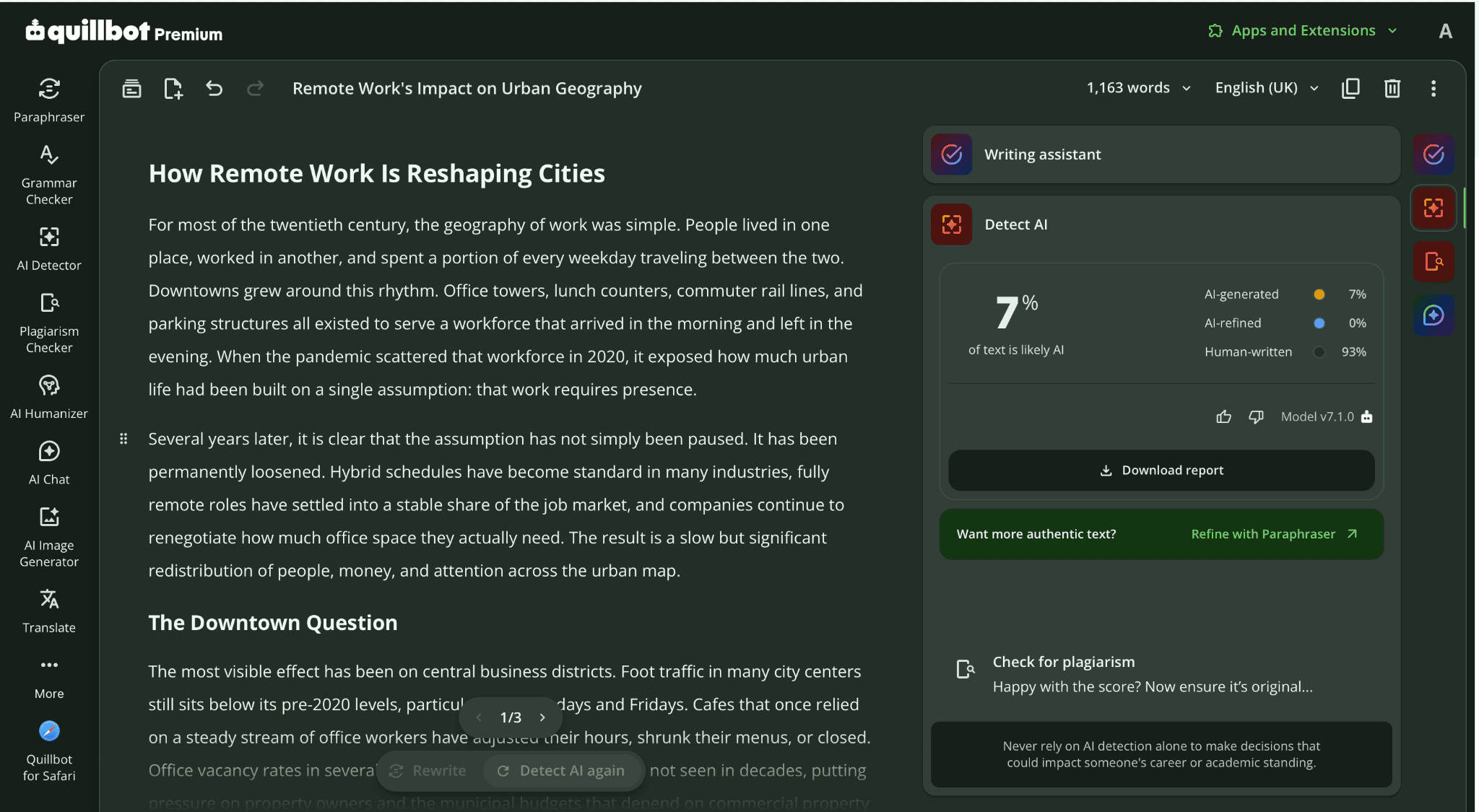
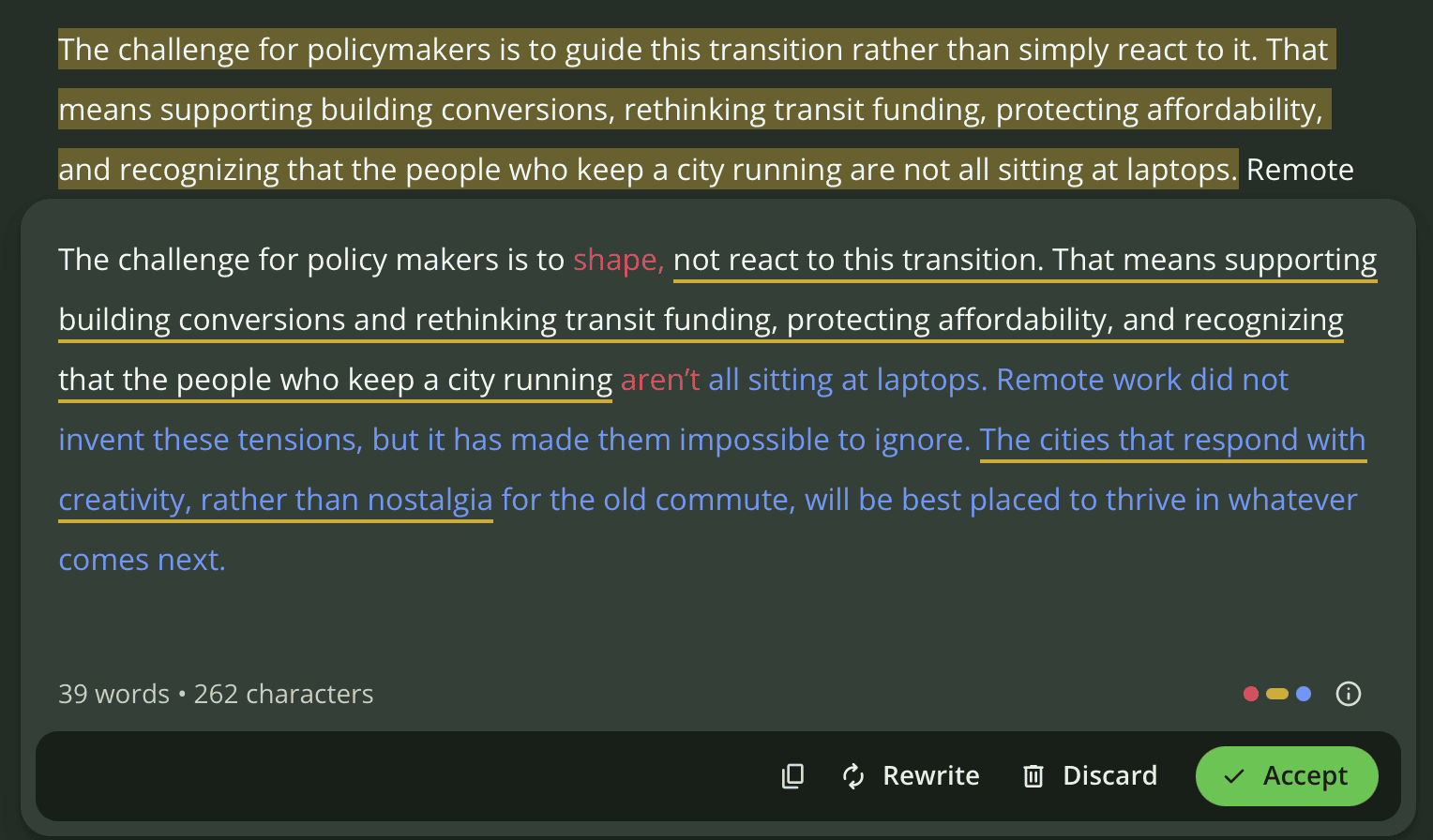
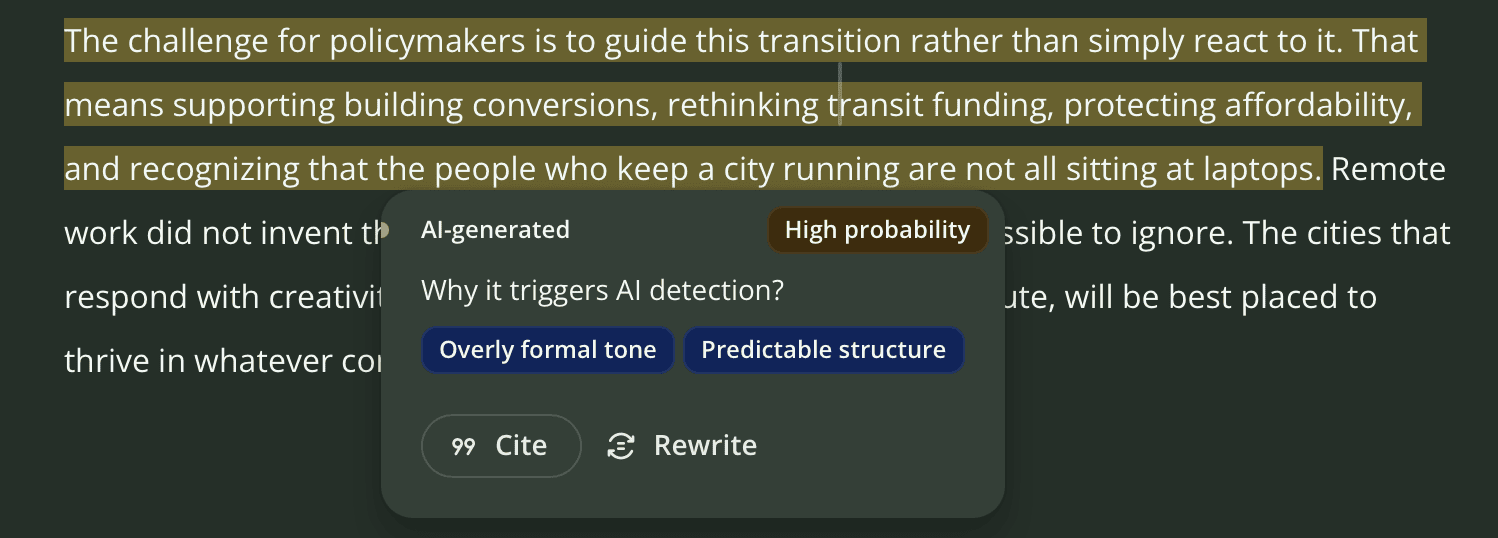
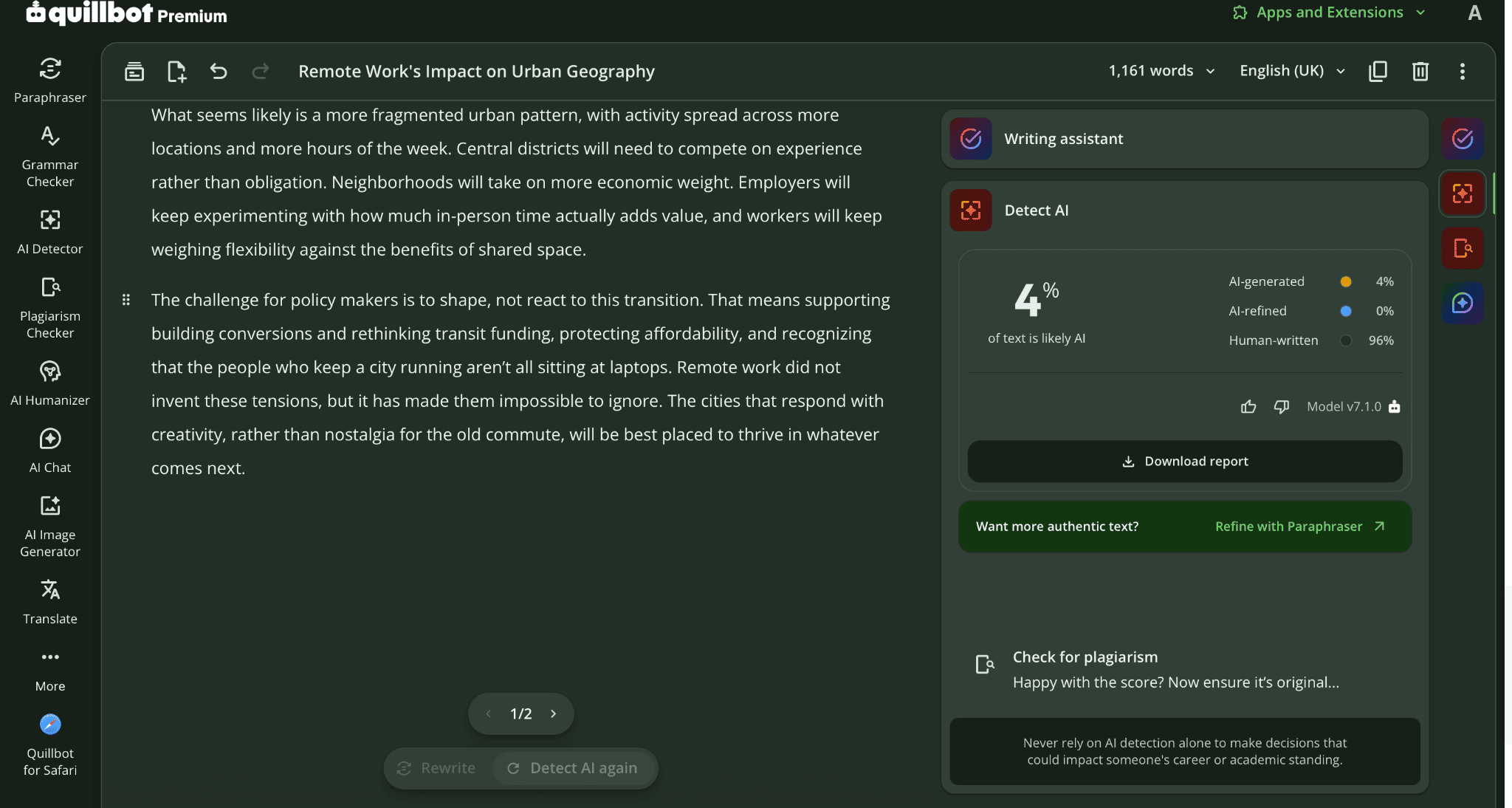
Observation: A text pasted straight from Claude should come back close to fully AI-generated, so 7% is already a miss. The paraphraser then pushed the score lower, which shows how easily this detector loses the trail. The experiment is simple to repeat: reword one passage with a free AI rewording tool and compare the detector scores before and after.
Test 2: A Complex Scientific Text
Setup: Next, I prompted the AI to “write scientific text with difficult sentences to test the AI detector”, assuming that complex constructions would give the detector more patterns to catch.
🎯 Result: The text scored 0% AI.
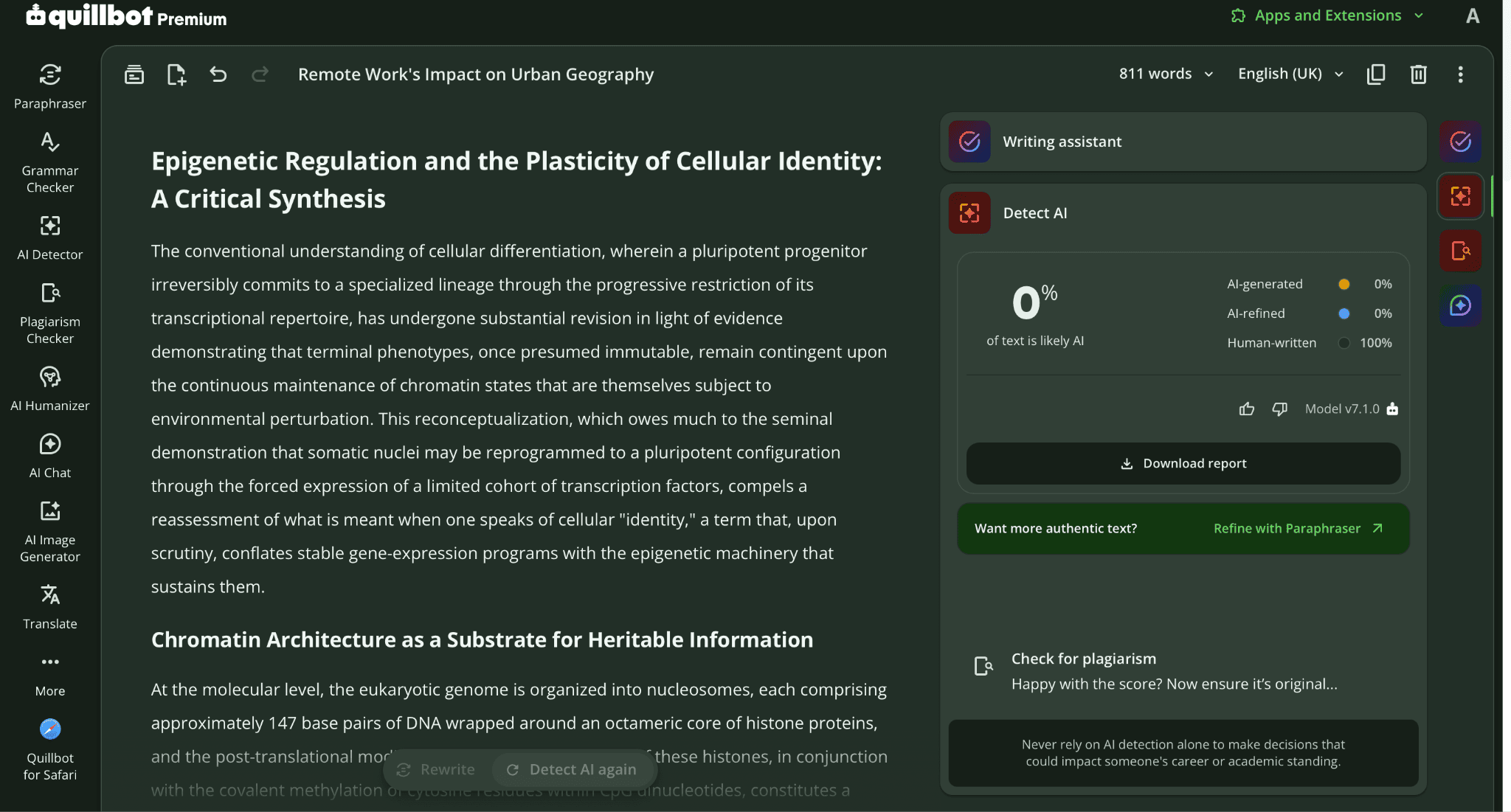
Observation: To my surprise, the harder text did worse, not better. Detectors rely on signals such as predictable phrasing and an AI-like rhythm, yet long, layered sentences are passed off as entirely human here. My assumption going in was that a detector would find more to work with in dense academic prose, because AI models tend to produce even, polished sentences. The result went the other way, which suggests QuillBot’s detector is not simply scoring sentence complexity or formality. It also means that a 0% on scientific, legal, or technical writing generated by an AI tells you very little.
Test 3: A Second Scientific Text
Setup: I asked the AI for one more text of the same kind to rule out a fluke.
🎯 Result: The text scored 0% AI again.
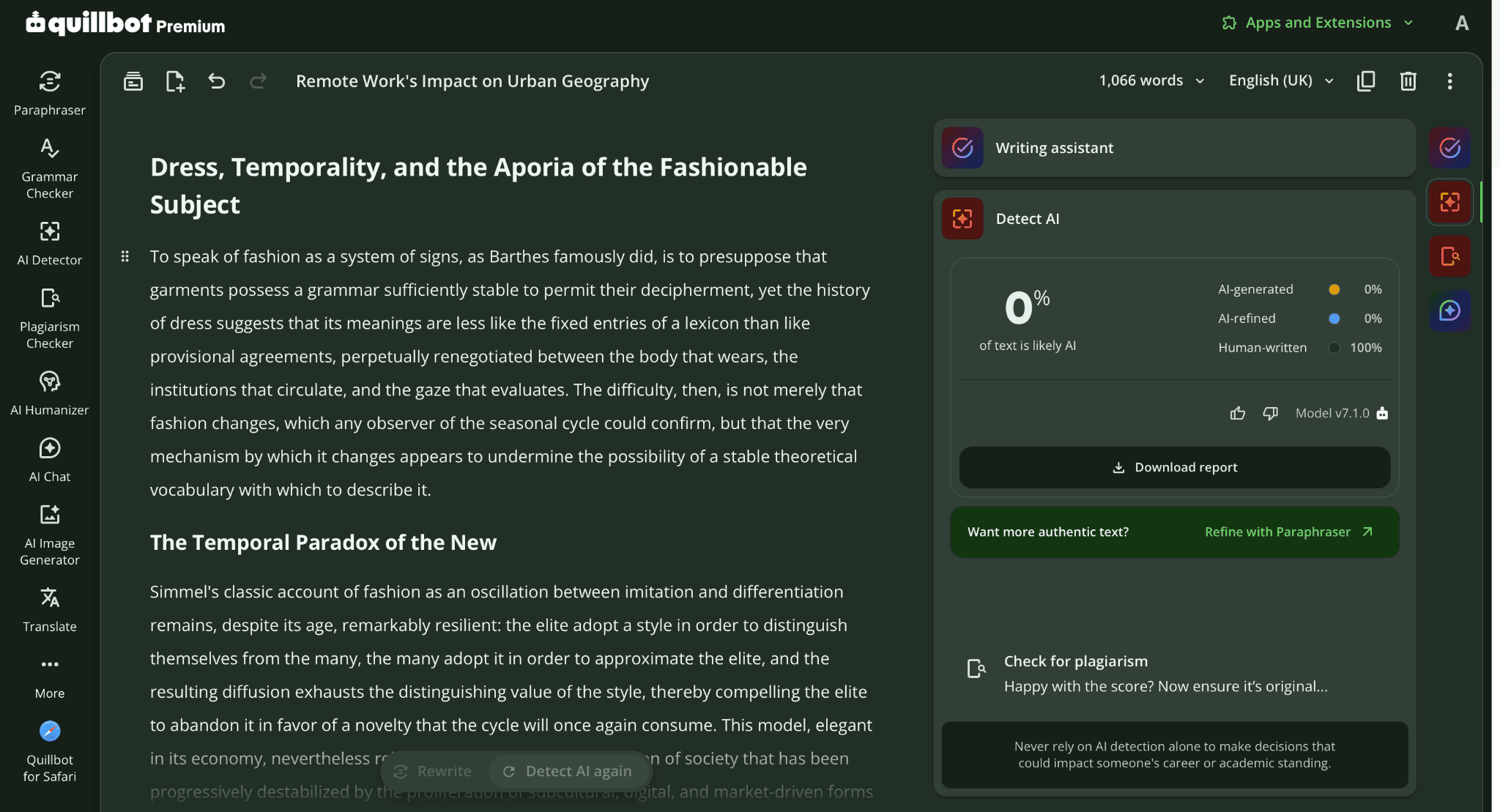
Observation: Two results at 0% mean the first one wasn’t a one-off. On this kind of AI-generated text, QuillBot’s AI detector didn’t flag a single sentence.
Test 4: A Human Article From 2011
Setup: I used “The Contagion of Happiness”, an article from Harvard written in 2011, years before ChatGPT existed.
🎯 Result: The article scored 0% AI.
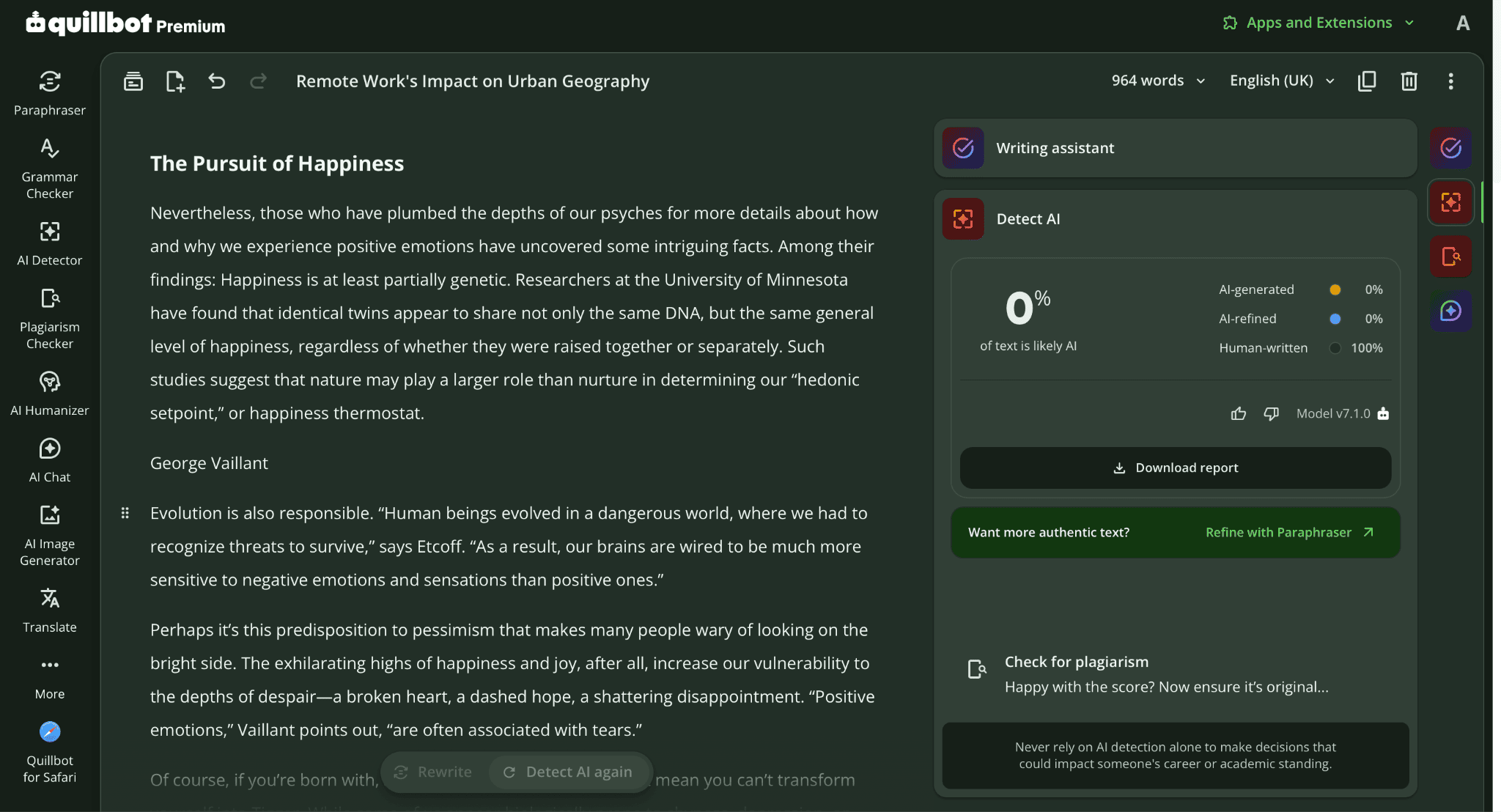
Observation: The score is correct for a human text, but it carries little weight here. A detector that gives 0% to both a Harvard article and fully AI-written texts hasn’t shown that it can tell them apart.
| Test | Text | QuillBot’s AI score |
|---|---|---|
| 1 | Unedited Claude text, 1,000+ words | 7% AI |
| 1 (paraphrased) | Same text after QuillBot’s paraphraser | 4% AI |
| 2 | AI scientific text with complex sentences | 0% AI |
| 3 | Second AI scientific text | 0% AI |
| 4 | Human article, Harvard, 2011 | 0% AI |
What these tests don’t cover: Four texts make a sanity check, not a measured accuracy rate. Mixed human-and-AI drafts, essays by non-native English writers, or short snippets were excluded from this round, and I ran the humanizer only once. Similarly, the summarizer was skipped, although condensing a long source with a summarizing tool before a detector check is a workflow worth trying. QuillBot updates its detector over time, and other AI models may produce different detector scores.
What Other Testers and Users Report
My results match a pattern in other tests:
- Quetext, a competing detector vendor, reported that QuillBot scored a ChatGPT-written blog at 0% AI.
- An Into the Minds test of 11 free detectors found QuillBot strong at detecting human writing but weaker at detecting ChatGPT -5 text.
These findings show that my low detection scores are part of a broader pattern rather than an isolated glitch.
What Official Benchmarks and Competitors Report
Vendor and benchmark numbers look better. QuillBot describes a custom model that scores text sentence by sentence, labels its confidence as low, moderate, or high, and looks for ten patterns such as an overly formal tone and predictable structure. That is a claim, not a result, and none of my AI texts triggered a single flag that would let me confirm it.
Industry benchmarks and competitor citations, however, tell a different story:
- GPTZero cites a ZDNet test that puts QuillBot at roughly 80% accuracy.
- Winston’s published RAID snapshot lists QuillBot catching 98.10% of AI writing at a 1% false-positive rate.
Needless to say, RAID’s generators include older models such as GPT-4, Llama and Mistral. My guess is that this gap explains why a strong benchmark number and a miss on newer AI text can both be true.
The review by fast.io puts the detector at roughly 80% accuracy on standard AI text and notes that QuillBot’s own product page warns users not to rely on detection alone for academic or career decisions. It also cites a Stanford study in which seven detectors misclassified 61.3% of essays by non-native English speakers as AI, a risk that applies to any detector, QuillBot included, and one I did not test.
Most of these sources are rivals or affiliates, so I weighed them accordingly: Quetext, GPTZero and AIDetectPlus sell competing tools, and DIY AI earns a commission on QuillBot sign-ups.
What Real Users Are Saying on Reddit and Trustpilot
User reviews cut the other way. Trustpilot reviewers quoted by AIDetectPlus say text they wrote themselves was flagged as AI, and that humanized output still scored 100% AI in QuillBot’s detector.
Reddit discussions point to similar unpleasant issues: text flagged by QuillBot as human was later flagged as AI by Turnitin. Community threads also highlight low-quality paraphrasing even on premium plans.
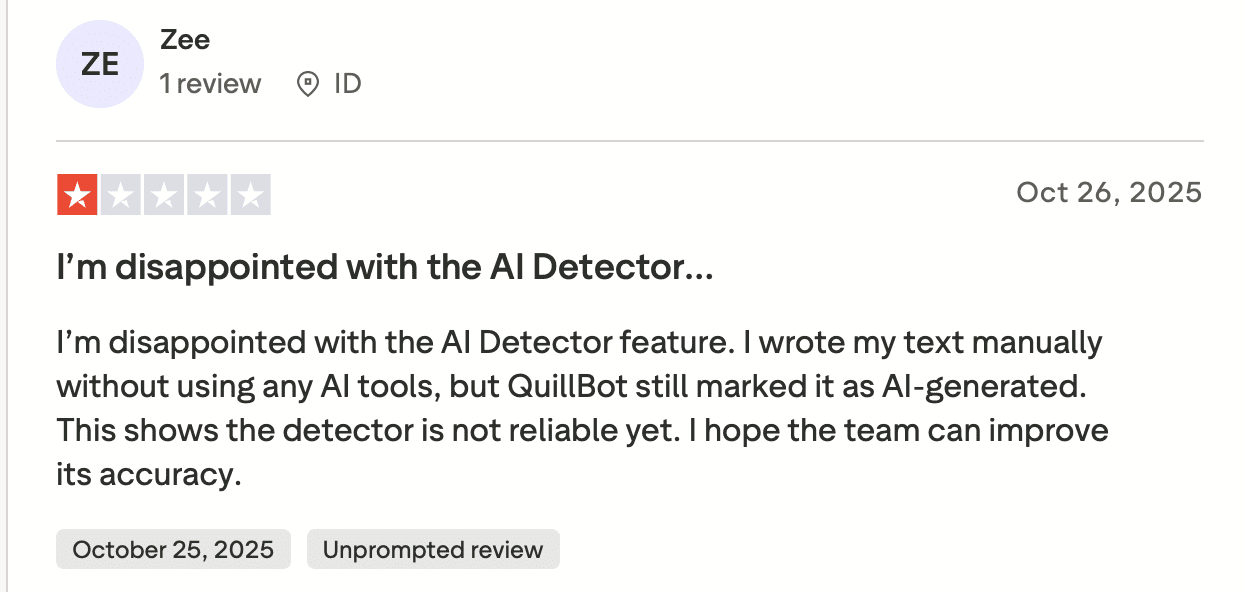
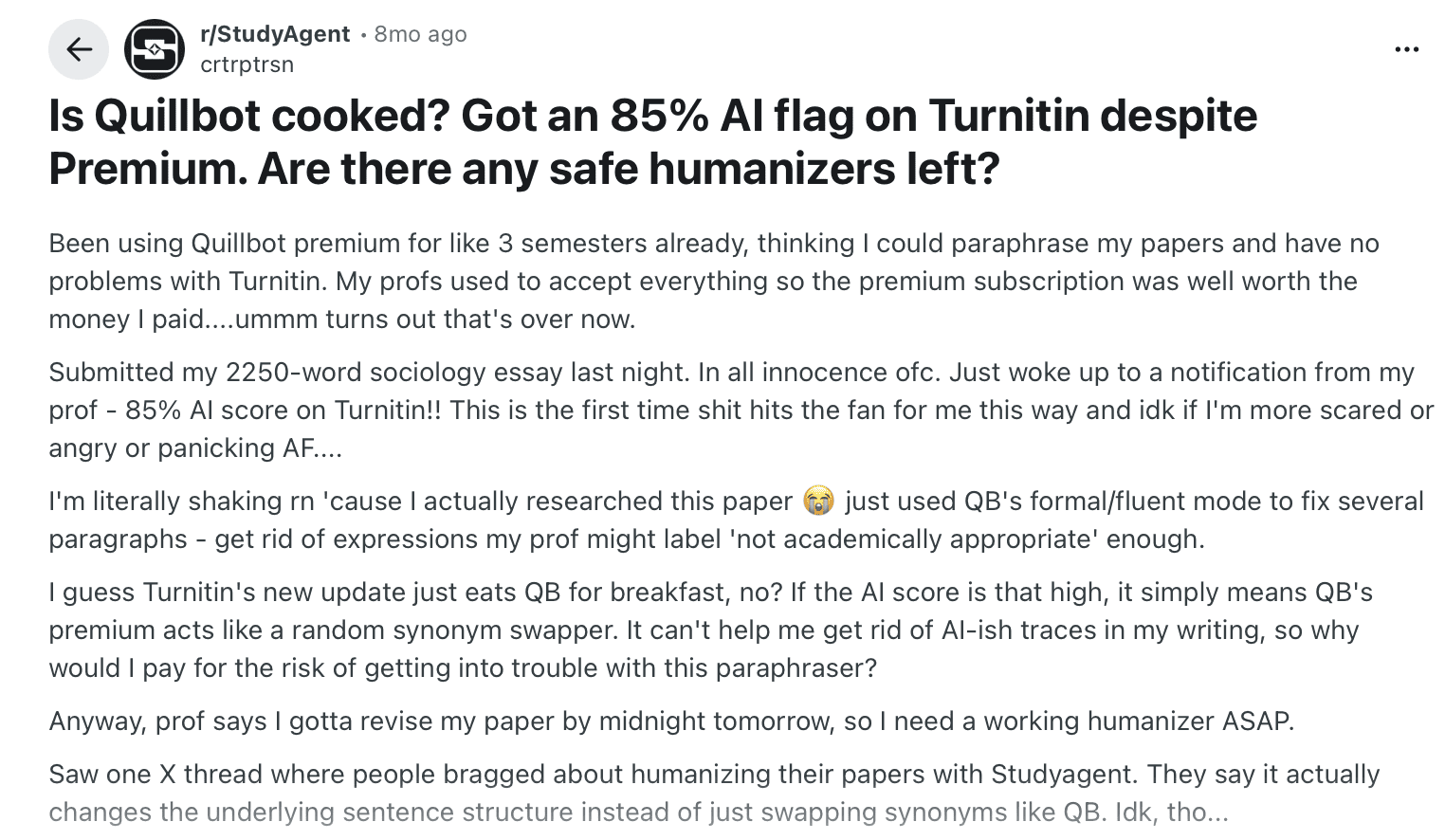
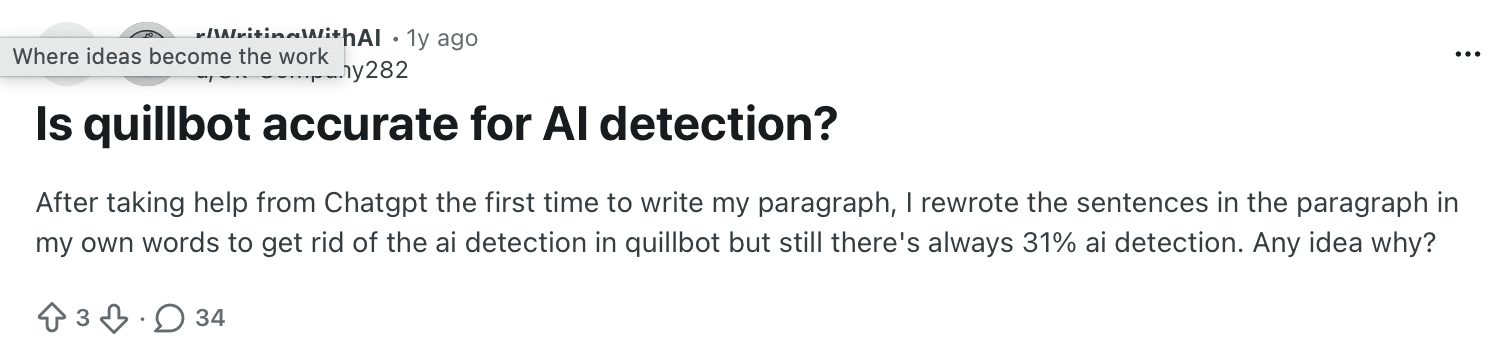
Taken together, the sources agree on one point: QuillBot’s AI detector is inconsistent, so I recommend treating its scores as a rough signal.
💰 QuillBot Pricing
Pricing as shown in my account on October 21, 2026, after signing up from Europe. The plans I saw were:
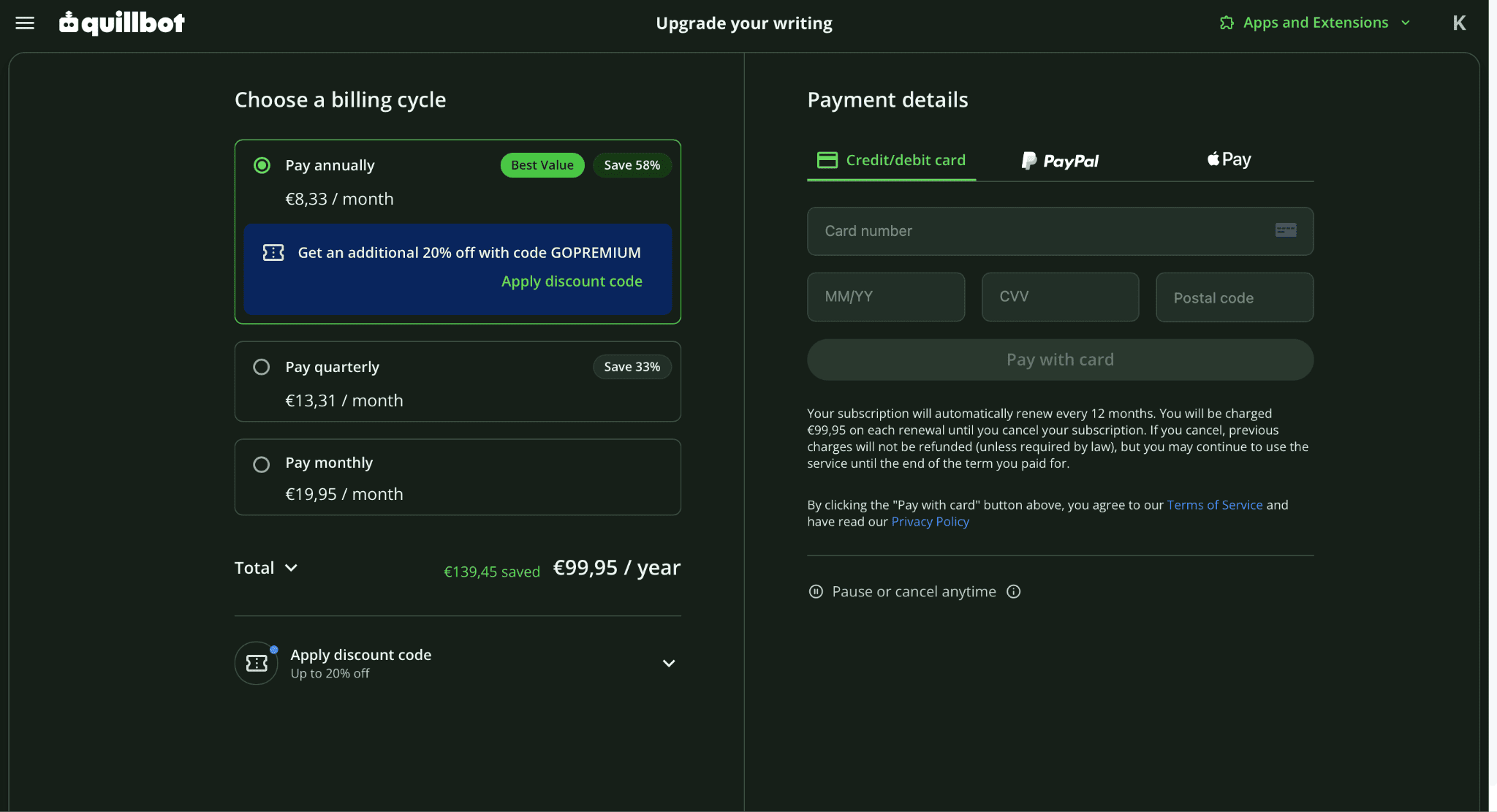
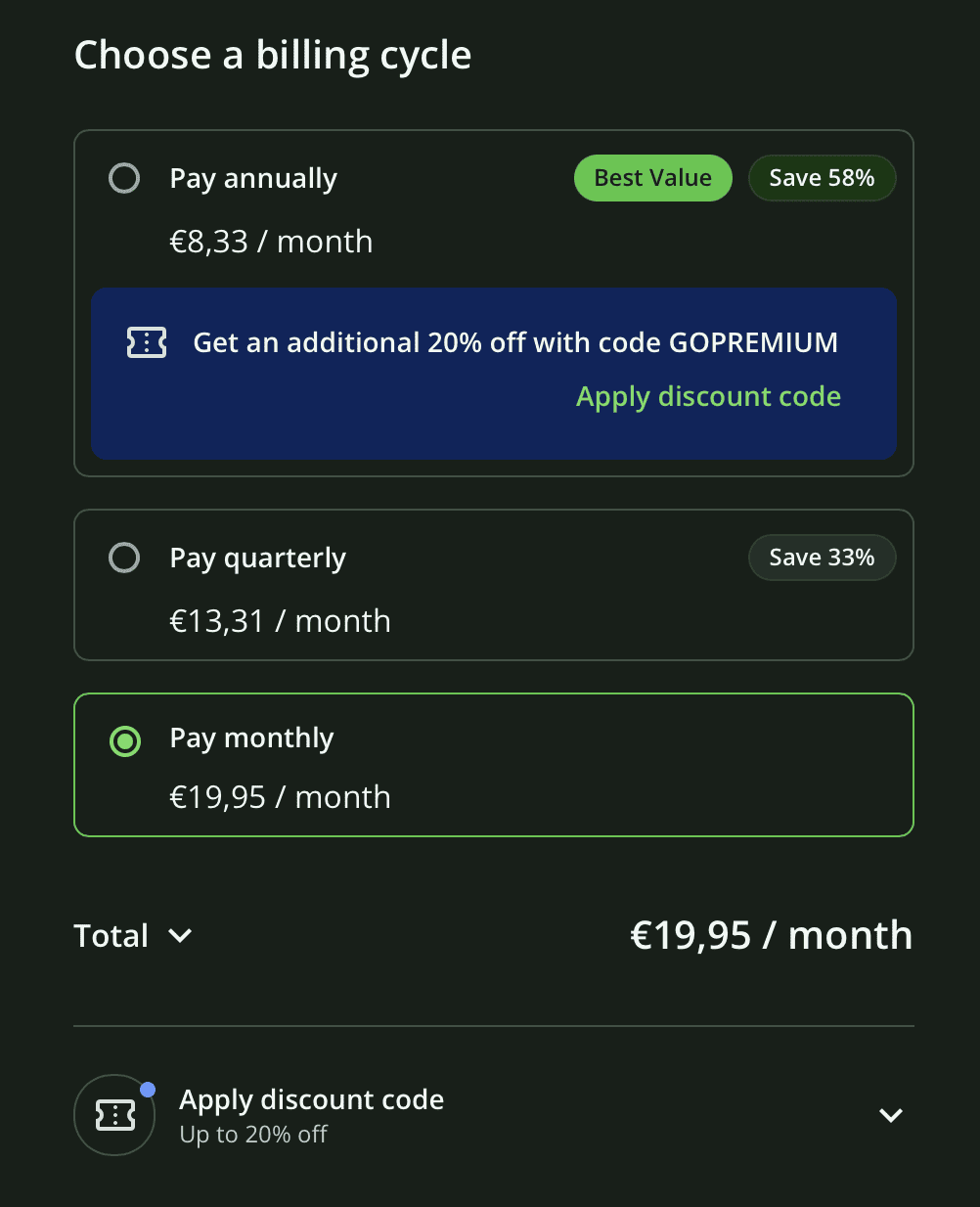
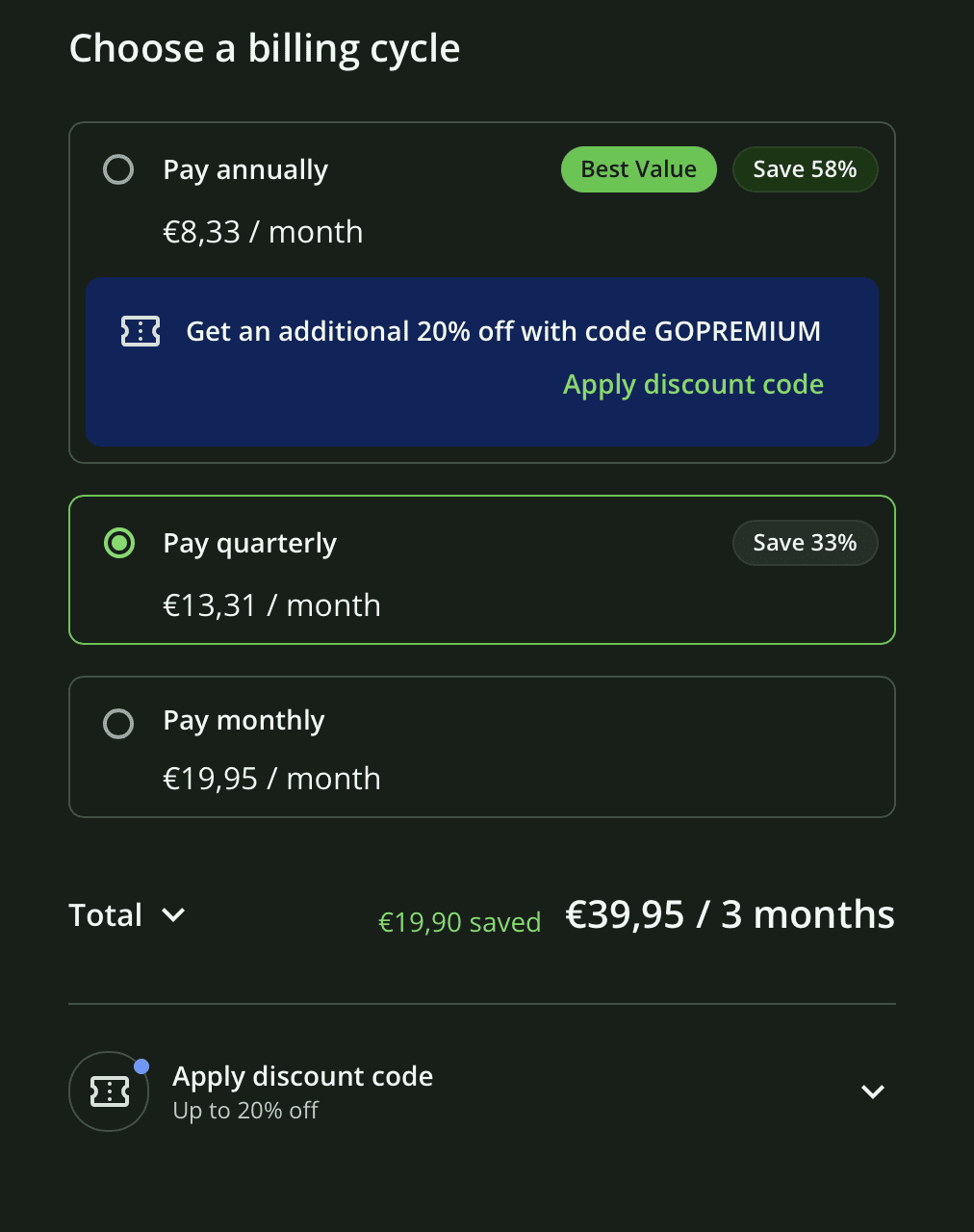
- Annual plan: €99.95 per year, or €8.33 per month.
- Quarterly: €39.95 per three months, or €13.31 per month.
- Monthly: €19.95 per month.
The monthly plan costs about 2.4 times the annual rate, so QuillBot Premium only makes sense if you commit to its full toolkit. Prices vary by region and promotion.
AIDetectPlus’s Quillbot AI Chat Review 2025 quoted $4.17 per month for the annual plan, while GPTZero lists $8.33 per month, so check the live checkout before you buy.
Free versus paid is the real decision:
- The free version lets you try it for free for detection and light paraphrasing, but the word limits interrupt longer documents.
- Premium adds unlimited paraphrasing, the advanced humanizer, an unlimited detector, and plagiarism checking.
The Premium plan is expensive next to single-purpose tools, and that toolkit is what you pay for. Whether it is worth paying for depends on how many of those tools you use.
📌 Tip: GetSolved’s roundup of the best free AI writing tools shows what you can get without a subscription. If detection is the only reason, QuillBot’s price is hard to justify.
How to Read QuillBot’s Detector Scores
AI detectors are probabilistic, not forensic, and my tests show why.
Use QuillBot as a rough first pass at most, and remember that even a 1,000+ word text pasted straight from Claude came back at 7%.
A 0% means this tool found nothing, not that a person wrote the text.
Treat a high score the same way: a flag is a reason to ask questions, not a verdict. Before you act on any result, run a second detector, look at the revision history, and ask the writer about their process. If a score affects a grade, a job, or a publishing decision, a human review has to come first.
QuillBot Alternatives
I didn’t run my four texts through other detectors, so I can’t fairly rank them against QuillBot.
- What I can say is that dedicated tools such as GPTZero, Originality, and Winston AI are built around authorship analysis rather than rewording, and some of them publish benchmark data you can check.
Keep in mind that this data comes from the vendors themselves, so it is a claim to verify, not a result. Benchmarks also depend on which AI models generated the test texts, and as the RAID figures above showed, a strong number on older models says little about newer ones.
The fairest comparison reuses my setup: one unedited AI text, a paraphrased version of it, a human-written article, and a dense scientific passage, each run through the detectors with the scores recorded. If a tool gives 0% on raw AI output, you have your answer without reading a single review.
Whether any of these tools beat QuillBot on your own text is worth testing with the same samples, and a result that holds across all four texts is far more convincing than a single lucky score.
Pros and Cons
👍 Advantages:
- Built-in rewriting: the paraphraser and humanizer sit in the detector window, so you can edit and recheck in one place.
- One toolkit: paraphrasing and grammar, a summarizer, plagiarism checking, and citations in one subscription.
- Free tier for testing: you can try it before paying.
👎 Disadvantages:
- Weak AI detection in my tests: 7% on an unedited Claude text and 0% on two complex AI texts.
- Paraphrasing lowered the score: 7% became 4% after QuillBot’s own paraphraser.
- Hidden pricing: the pricing window won’t open without an account, and monthly billing is €19.95.
- Untested extras: I did not test the grammar tools or the humanizer on their own.
Who Should Use QuillBot
QuillBot is for students and writers who already have a draft and want help with fluency, grammar, and alternative phrasing in one tool. It also suits anyone who wants a quick, free check before a deeper one.
Teachers and editors who need a verdict should treat QuillBot as one signal among several, never as the gatekeeper. It works for non-native English writers too, who want a second opinion on phrasing, as long as they keep the final decision on meaning and tone.
Skip it if you need a reliable detector for grading, hiring, or publishing decisions. In my tests, QuillBot’s AI detector could not separate AI text from a human article, and no detector score should be the only basis for accusing someone of AI use.
Final Verdict
QuillBot wins as an editing toolkit and loses as an AI detector. The paraphraser, humanizer, and writing assistant make a useful tool for polishing text, and the price is fair if you use several of them. As a detector, it missed fully AI-generated text in three of three tests.
The detector result is the part I’d change first. A free AI check that returns 0% on fully AI-generated text creates false confidence, which can hurt more than having no check at all.
Judged on the job it was built for, QuillBot earns its place: it helps you rewrite, tidy, and check a draft without leaving the window. When judged by an AI checker, it needs a second opinion every time.
The gap between the toolkit and the detector is the honest takeaway from this QuillBot review, and my screenshots back it up.
Choose QuillBot for rewriting and grammar, and pick a dedicated detector when the score actually matters!
QuillBot FAQ
Is QuillBot’s AI detector accurate?
Not in my tests: it scored fully AI-written texts at 7%, 4%, and 0%. Other testers report similar misses on mixed and newer AI text.
Does QuillBot have a free version?
Yes, the free version includes the detector with a word limit, and the free plan also covers limited paraphrasing and humanizer.
Can Turnitin detect QuillBot?
It may. Turnitin looks at patterns and similarity, not tool names, so paraphrased text can still be flagged.
Is QuillBot safe to use?
It is safe for everyday writing. Avoid pasting confidential or policy-restricted material into any third-party tool.
Is QuillBot worth paying for?
Pay for QuillBot Premium if you paraphrase and edit often. Don’t pay for it only to get AI detection.