AI writing is no longer a trend. It is part of everyday work and study. So, finding the best AI checker to detect generated content is more important than ever.
Students use it for essays, research papers, reports, personal statements, and other academic writing tasks. Marketers use it for blog posts, landing pages, LinkedIn texts, and various social media content. Businesses rely on it for emails, reports, and documentation. Even researchers experiment with AI-assisted writing.
Because of this shift, checking for generated content has become just as essential as creating it.
Why AI detectors matter
- Different tools produce very different results and accuracy levels.
- A poor detector can wrongly flag human writing as AI-generated.
- Reliable detection helps users edit and improve content before submission or publishing.
- The right tool saves time by combining detection, plagiarism checks, and writing support in one place.
There is a serious problem.
👉 AI checkers often disagree with each other and do not reflect the real situation.
You can paste the same paragraph into three tools and get three completely different results. One says “100% AI.” Another says “human.” The third gives a mixed score.
What makes it even more frustrating is that this can happen even when you wrote everything yourself. Many students, writers, and professionals have run into situations where their own original work gets flagged as AI-generated just because it sounds a bit too polished, well-structured, or formal.
That creates confusion and real consequences, especially for students.
So how do you know which tool to trust? This guide answers that question.
We tested the most popular tools in real scenarios. We looked at free and paid options and compared accuracy, false positives, speed, and usability. If you’ve been asking what is the best AI checker, you will find a clear, honest answer here based on testing, not marketing.
AI checker quick picks
| Tool | Accuracy | False positives | Pricing | Best for |
|---|---|---|---|---|
| Getsolved | 85–95% | 5–10% | Free / Paid | Students & researchers |
| Originality.AI | 90–98% | 10–20% | Paid (credits) | SEO specialists |
| Winston AI | 80–92% | 8–15% | Paid (subscription) | Publishers |
| Copyleaks | 78–90% | 15–25% | Paid (subscription/API) | Enterprise |
| GPTZero | 60–75% | 20–35% | Free / Paid | Education |
| QuillBot | 65–80% | 20–30% | Free / Paid | Casual use |
| ZeroGPT | 50–70% | 30–50% | Free | Quick checks |
| Undetectable.ai | 30–80% | Variable | Paid | Rewrite |
| Phrasly AI | 30–75% | Variable | Paid | Bypass |
Our testing methodology
Before ranking any tool, we needed a more balanced and realistic testing system.
We’ve checked 30 texts belonging to three types of content:
- AI-generated text. Content created using modern AI models with minimal editing.
- Human-written text. Articles, essays, and reports written without generative tools.
- Mixed content. Automated text that was edited by a human.
This third category is the hardest. It reflects real-world use, where people don’t just copy generated output; they modify it.
We measured 4 key factors:
- Accuracy. How often results are correct.
- False positives. The most critical metric.
- Consistency. Same text, same result.
- Speed. How fast results appear.
The false positive problem
Because a tool that incorrectly flags human writing can cause real damage. A student may be accused unfairly. A writer may lose trust.
In our tests, we also ran each text through multiple tools to see how results changed across platforms. This helped us identify patterns and weaknesses.
What is an AI checker?
📌 An AI content checker is a tool that analyzes text and estimates whether it was written by a human or generated by artificial intelligence.
It doesn’t know for sure. It predicts based on patterns like sentence structure, word choice, grammar, and repetition.
Generated text is often smoother and more predictable, while human writing varies more.
The tool compares your text to a trained dataset and returns a probability score, such as “95% AI” or “likely human.”
👉 But you should understand that this isn’t proof. It is a probability.
Why automated checkers miss?
There are limits to even the most reliable detector. The main points are:
Mistaken positives
Digital tools can mark text that a person wrote as automated. A lot of the time, this happens with:
- Formal writing.
- Language used in school.
- Well-organized content.
Bias in the data used to train
If a tool is mostly trained on certain types of text, it may perform worse on other types.
Different ways to do things
There is a different model for each tool. That’s why the results are so different.
Artificial intelligence is changing quickly
Generative models get better very quickly. Tools for finding things are often behind. Because of this, you shouldn’t rely on just one tool.
Now, let’s move on to the main part and take a closer look at the best AI detectors available today.
9 best AI checkers in 2026
Getsolved.ai
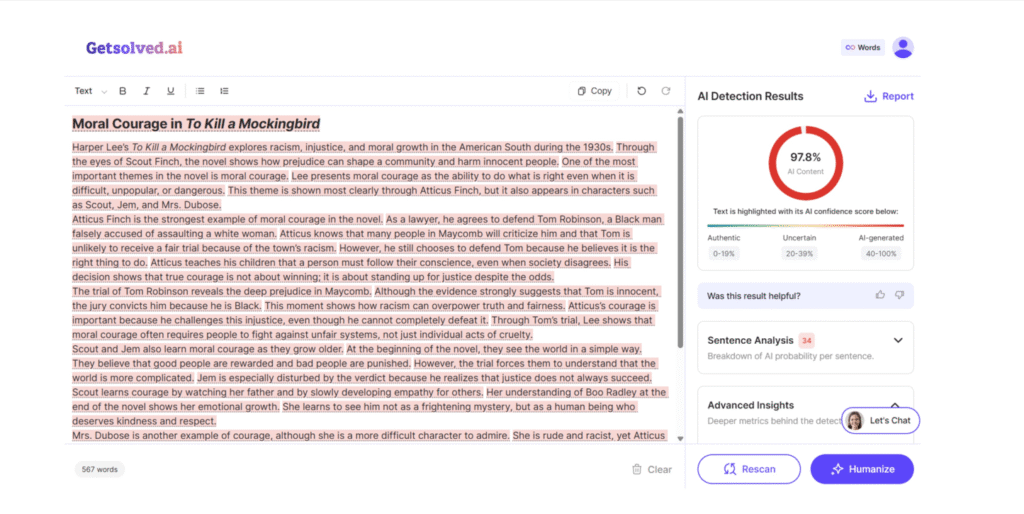
Getsolved.ai showed great results. At first, it looks like a very simple tool, but once you try it, you see it works really well. It doesn’t overload you with features, and that actually makes it easier to use. It feels like one of those tools that just does its job without complicating things.
In terms of performance, it sits in the 90% accuracy range. It’s quite strong for a free-first tool. What really stands out is its low false positive rate. This means it rarely flags normal human writing as generated.
In our checks, if you slightly edit the generated text, Getsolved doesn’t panic and flag everything as fake. It stayed balanced.
Pros
- Low false positives
- Clean, intuitive interface
- Test against multiple detectors
Cons
- Limited enterprise features
- Still growing vs. older platforms
GPTZero
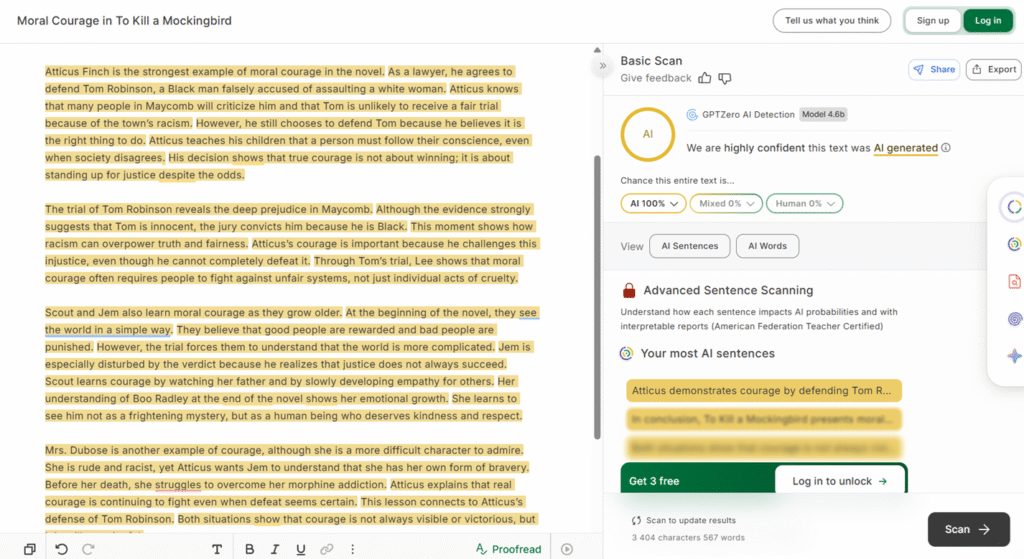
GPTZero has been around for quite some time. Many teachers started using it early on, and that’s one of the main reasons it’s still widely used today.
The interface is very simple, so you can use it right away without having to figure anything out. But being well-known doesn’t always mean it’s the most accurate.
It works fine when checking fully generated text. But when the content is edited or mixed, it becomes less accurate and starts to have trouble.
Pros
- Widely used in education
- Very simple interface
- Free version available
Cons
- Medium accuracy
- Can flag human writing by mistake
Originality.AI
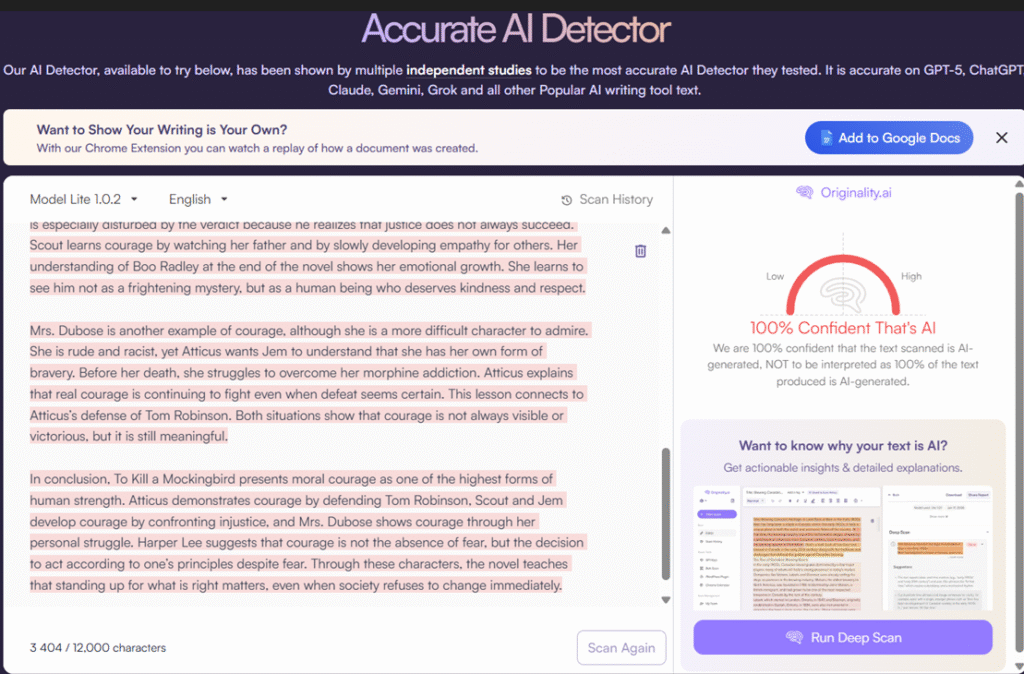
Originality.ai is often used by people who work with content every day, like SEO specialists and agencies. It’s known for being strict, sometimes even too strict.
If you want a tool that catches almost everything, this one definitely tries to do that. But because of that, it can also be a bit harsh on well-written human text.
This platform is extremely good at catching generated content. In a large benchmark project called RAID, Originality.AI ranked first across multiple datasets. However, it can sometimes flag polished human writing, especially when it looks very structured.
Pros
- Very strict detection
- High accuracy
- Trusted by professionals
Cons
- Paid only
- Can be too strict sometimes
Winston AI
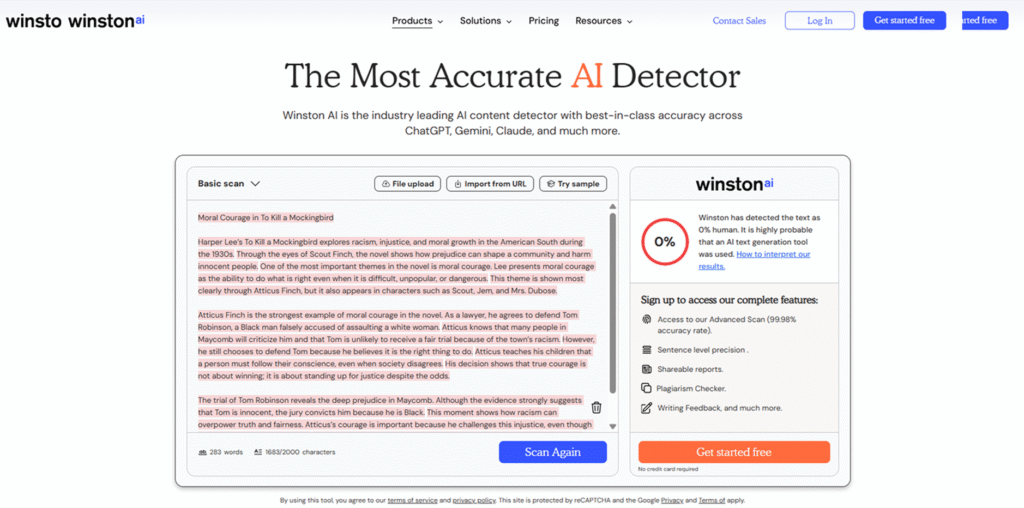
Winston AI feels more polished than many other best AI checker tools. It’s often used by publishers or teams that deal with a lot of content.
It tries to stay balanced, and it makes the results feel more realistic. If you want something steady and predictable, this tool is a good choice.
This tool worked well across all categories. It didn’t overreact or miss obvious cases. If you publish content regularly and want stable results, this one feels reliable.
Pros
- Balanced performance
- Low false positives
- Smooth user experience
Cons
- Paid subscription
- Limited free access
Copyleaks
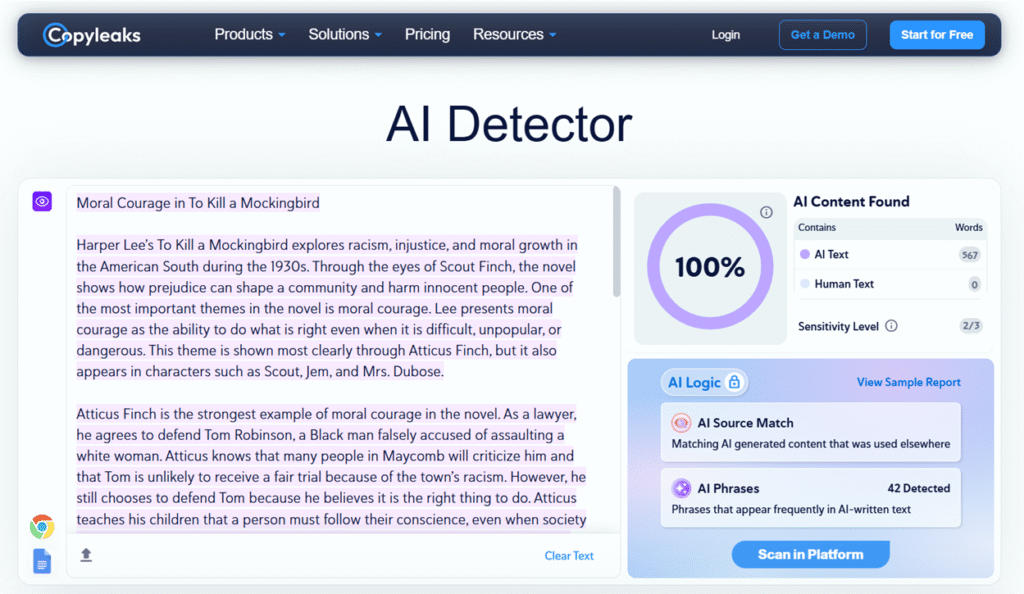
Copyleaks is built primarily for businesses and larger teams rather than casual users. It has more advanced features. This can be helpful, but also confusing at first.
You can tell it’s designed for serious use, especially in education and companies. It’s not the simplest tool. Still, it’s definitely a powerful one.
It had no trouble with clear examples and stayed pretty accurate most of the time. Nevertheless, when the text was edited or partly rewritten, the results became less consistent.
Pros
- Strong detection system
- API integration for businesses
- Used in education and research
Cons
- Interface can feel complex
- Pricing is not very clear
QuillBot
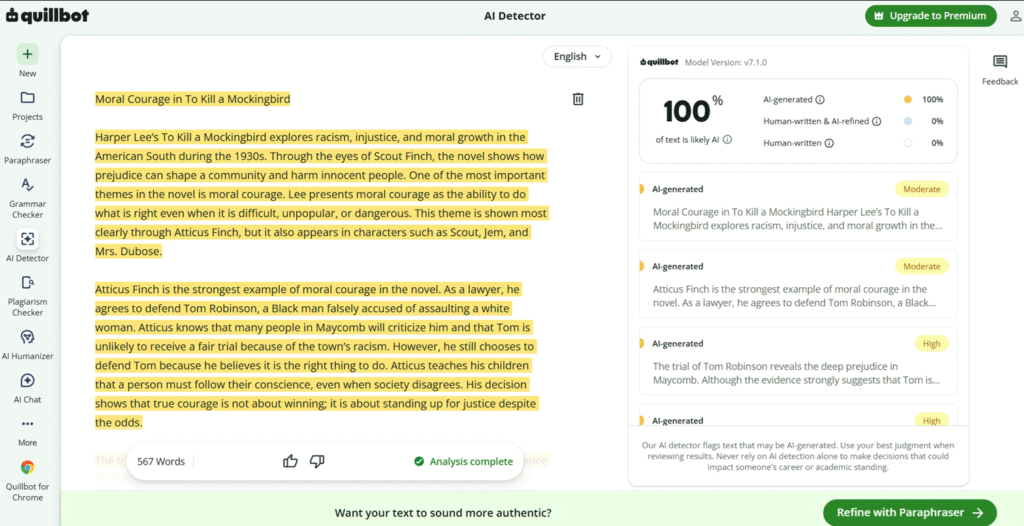
QuillBot is one of the easiest tools on this list to use. Most people know it for rewriting text, but it also has a basic detection feature. It’s very simple and quick, which is great if you don’t want to spend time figuring things out.
QuillBot works fine for quick checks. If you just want a rough idea, it does the job. But for anything serious, like academic work or publishing, it’s not reliable enough on its own.
Pros
- Free access
- Very simple interface
- Fast results
Cons
- Average accuracy
- Limited insights
ZeroGPT
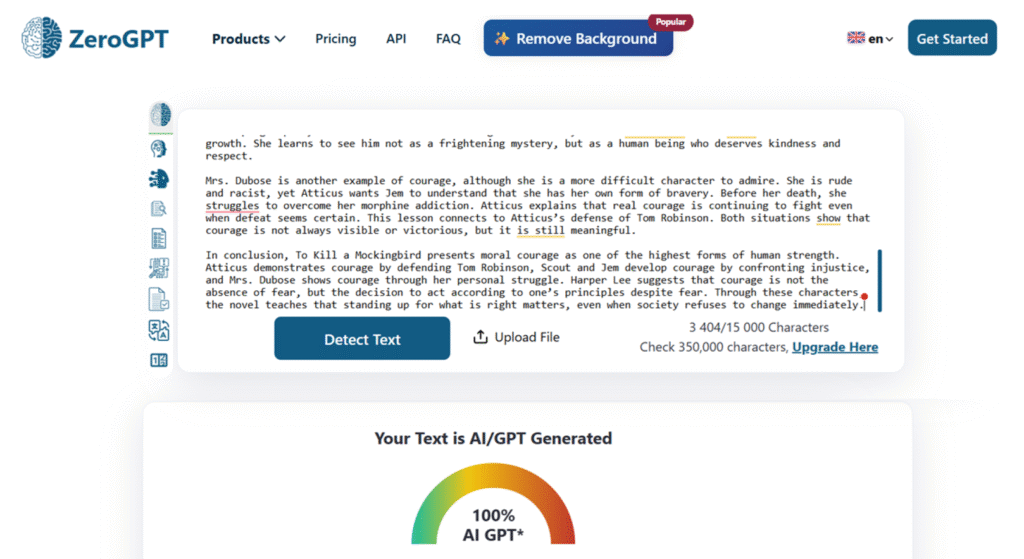
ZeroGPT is popular mainly because it’s free and easy to access. At first glance, it looks pretty impressive, especially given its accuracy claims.
This AI writing checker didn’t perform well in most of our tests. It often got things wrong, especially when the text was mixed or slightly edited. Once you use it more, you notice it doesn’t always give consistent results.
Pros
- Free
- Fast
Cons
- High false positives
- Low reliability
Undetectable AI
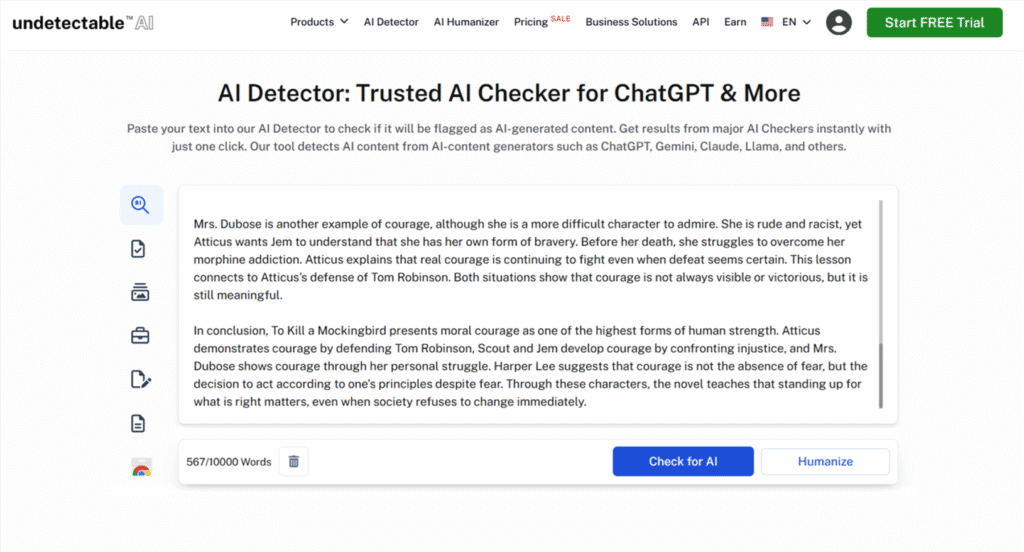
Undetectable.ai is a bit different from the others. It’s not really meant for checking text. It’s more about rewriting it to make it sound more natural.
People usually use it to try to avoid detection tools. So it’s more of a workaround tool than something you’d rely on to check content properly.
Its performance is very inconsistent, usually ranging from 30% to 80% accuracy depending on the input, and there’s no stable level you can count on. One version of a text might pass, while a slightly changed version gets flagged, even if the meaning stays the same.
Pros
- Tries to make the generated text look human
- Useful for testing detection limits
Cons
- Not consistent
- Doesn’t guarantee success
Phrasly.ai
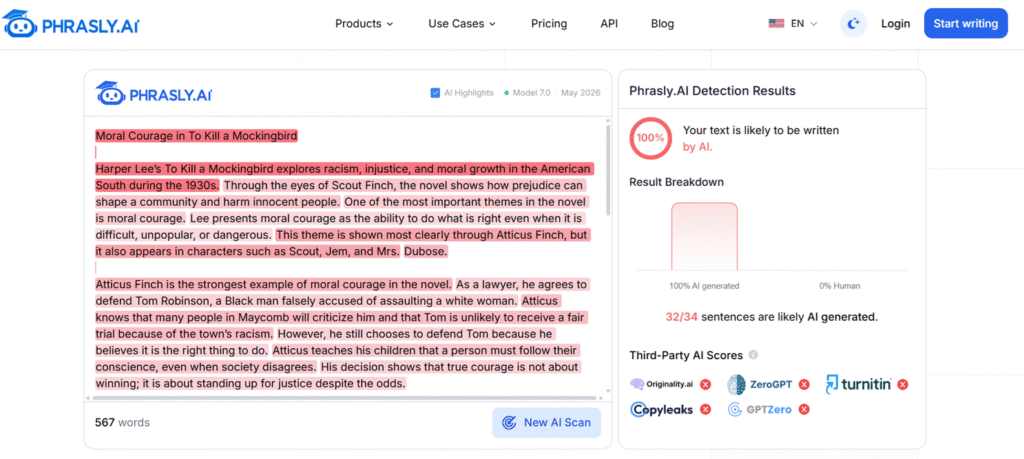
Phrasly.ai used to rewrite texts rather than analyze them. The AI detector is very simple to use, so it works well if you just need quick edits or small changes. Importantly, it’s not built for checking or detecting content, so it plays a different role.
Its results are also pretty inconsistent, usually between 30% and 75% depending on the text, so there’s no steady level of accuracy you can rely on. This is not really a detection tool. It’s meant to rewrite content.
Pros
- Simple to use
- Focus on rewriting content
Cons
- Results are unstable
- Not designed for detection
Comparison overview
🎯 Most accurate AI checker
Top platform: Originality AI
This tool was the best at spotting generated text. It feels more balanced than other platforms. It still detects most cases, but it doesn’t overreact as much.
🏆 Lowest false positives
Best tools: Getsolved.ai, Winston AI
These tools were much safer when checking human-written text. They didn’t randomly flag clean writing, which is really important if you don’t want false alarms. Getsolved felt especially stable, while Winston stayed consistent across different examples. Both are good choices if you care about accuracy without unnecessary mistakes.
💸 Best free AI checker
Top options: Getsolved.ai, QuillBot
If you don’t want to pay, these are the most practical options. Getsolved gives more accurate results overall and feels more reliable. QuillBot is simpler and faster. So, it’s great for quick checks. It’s not as detailed, but it’s easy to use.
🚩 Worst performers
The tool: ZeroGPT
ZeroGPT had the most issues in our testing. It often flags normal human writing as generated, which can be frustrating. It also struggled a lot with edited or mixed content, where other tools performed better. Accordingly, the results didn’t feel stable or trustworthy. It may be okay for a quick check. Still, it’s not something you should rely on when checking important content.
Best AI checker by goal
Different people need different tools, so there’s no one-size-fits-all option here. It really comes down to what you’re using it for.
Best for SEO
Originality.AI
It’s very strict and good at catching even slightly edited generated content. That’s useful if you care about rankings and content quality.
Best academic tool
Getsolved.ai
It’s a great option for researchers and doesn’t flag human writing too often. A solid choice for everyday use.
Best for publishers
Winston
It gives steady, reliable results. It’s helpful when you’re regularly checking a lot of content.
Best for quick checks
QuillBot
It’s fast and simple. If you just want a quick look before submitting something, it’s a perfect choice.
Free vs paid detectors
| 🕊️ Free tools are enough when: | 💰 Paid tools are better when: |
|---|---|
| You need a quick check | You publish content professionally |
| You are testing content | You work in academia |
| Accuracy is not critical | You need reliable results |
To give a clearer example, let’s look at Getsolved.ai in practice:
Getsolved.ai offers a strong free version. Plus, the paid plan gives you a bit more control and depth.
- You get more detailed reports, so it’s easier to see which parts of the text might be flagged and why.
- It also lets you check longer texts and run more scans without hitting limits.
- Another nice upgrade is better detection, which looks deeper into writing patterns rather than just surface signals.
Overall, the paid version just feels more comfortable to use day to day, especially if you’re working with longer or more important content.
Another useful feature is the ability to compare your text by other detectors available on the Getsolved platform. You can run it through Scribbr, Originality.ai, ZeroGPT, Grammarly, or GPTZero and compare the results in one place for a more balanced and objective view.
Can you trust AI checkers?
No tool guarantees 100% accuracy. Even the best systems can fail. When you rely on the most reliable AI checker ever, it’s rather risky. That’s why professional writers recommend:
That’s why professional writers recommend:
- Use 2-3 tools
- Compare results
- Review manually
5 tips for better results
1. Don’t stick to just one platform.
Different tools can give different results, so it’s best to check a few for clarity. Or you may use Getsolved, an all-in-one AI writing assistant, it combines AI detection, fact-checking, rewriting, summarizing, and grammar improvements. So, you don’t need to switch between multiple tools.
2. Don’t focus only on the percentage.
That number alone doesn’t say much. If there are details or highlights, take a quick look at those too.
3. Read the text yourself.
Go trough it again after a short break. You’ll often notice smal issues or awkward parts that tools miss.
4. Watch how the sentences sound.
If something fells too robotic, too perfect, or just slightly “off,” that’s worth paying attention to.
5. Trust your own senses too.
Tools can help, but your own judgment still matters a lot when deciding whether something feels natural.
Final verdict
If you need to pick just one tool, Getsolved.ai is the best overall choice, even the free version works well for most cases. GPTZero is still popular too, especially among students, since many schools already use it.
Detection tools are improving, but they’re still not perfect. Some are clearly better than others, but none of them can guarantee fully accurate results every time. That’s why it’s better not to rely on marketing claims.
Instead, check results across a few tools, use your own judgment, and always review your text with a humanizer to make it sound natural and safe. That’s where Getsolved stands out — it combines detection with built-in humanization features and makes it a convenient choice for students and professional writers.
FAQ
Our tests show Getsolved is a trustworthy tool with solid accuracy, low false positives, and easy use. It combines AI detection with writing improvement features on a single platform. It also has customizable settings, so users can adjust it to their needs and writing style.
These platforms are now better than before. Still, they are not perfect. Results can depend on the tool you use, the type of text, and how much it has been edited. That's why it's smarter to check your content with more than one tool.
Yes, most programs can do it. Still, if content is edited or rewritten, detection becomes less accurate.
We tested many tools. Among them, Getsolved and QuillBot are the best free options. They are simple to use and give fairly reliable results most of the time.