
Writing a novel sounds like an easy job. You have the main idea, but you need to maintain the same voice, make the characters believable, and not sound like an inexperienced writer. Editors are reliable allies, but their work takes time, and not every indie story writer can afford one. This is where Artificial Intelligence tools for story creation come in, as they help you write a story based on the premise in your mind.
Over the last month, I tried 10 AI tools and rated them by how helpful they were in my book-writing process. I checked their ability to bring my ideas to life and keep the story flowing. I’ve compiled all the necessary information, from price to features, so that you can find the best option for your creative flow.
What Makes a Good AI Tool for Story Creation?
A good AI story generator needs to do more than create a paragraph from a prompt. It must build a realistic story, create a structure, and effectively rework a sentence without changing its meaning.
A high-quality AI tool to write fiction will have the following:
- The ability to draft more than 3,000-5,000 words in one go
- Character, tone, setting, and world-building features and memory
- Easy prompt and output customization
In the end, a good tool for creative writing isn’t defined by the number of words it gives you. It’s about how those words are delivered.
How I Evaluated an AI Story Generator
On September 10, I tested these tools based on their ability to handle different stages of fiction writing. This included developing an idea, planning the story, creating the characters, drafting the text, and maintaining continuity. I verified their ability to revise a finished text, either written or generated.
I used the same prompt for all tools: create a 2,000-word fantasy story about a girl finding a portal to a magic land. I asked the tool to generate the full text and assessed the output based on its realism, tone, and the editing control I received at the end.
Overview of Story AI Writing Tools
Each writing assistant for novelists comes with its own purpose and prices. Here are some popular AI fiction writing tools I’ve checked.
| AI Tool | Best For | Starting Price | Free Options |
|---|---|---|---|
| Getsolved | Story generation and text editing | $39.99/month | Free Version |
| Sudowrite | Fiction writing and interactive storytelling | $10/month | Free Trial |
| ChatGPT | Flexible story development and idea brainstorming | $10/month | Free Variant |
| NovelCrafter | Plotting and long-form projects | $8/month | Free Trial |
| DeepFiction | Interactive storytelling and visual-first narratives | $4/month | Free Credits |
| Claude | Long-form writing assistance | $20/month | Free Version |
| Inkfluence AI | Full chapter generation in book and eBook format | $9.99/month | Free Chapters |
| Squibler | Full manuscripts and visual plotters | $15.83/month | Free Variant |
| NovelAI | Plot creation and longer novels | $10/month | Free Trial |
| Rytr | Short texts and creative pieces | $29/month | Free Tier |
Many of these tools have different tiers, depending on how much text you want to generate. For instance, Getsolved has a $2 plan that you can use for seven days before the monthly plan kicks in. Sudowrite has separate plans for hobbyists, professionals, and high-rolling authors. Assess the plans based on your needs.
Top 10 AI Tools for Story Writing
I tested multiple content generators to determine which one offered the best story structure and creative flow. Here are the top AI tools for story creation that I came across:
1. Getsolved – Best Overall for Story Writing
Rating: 4.8/5
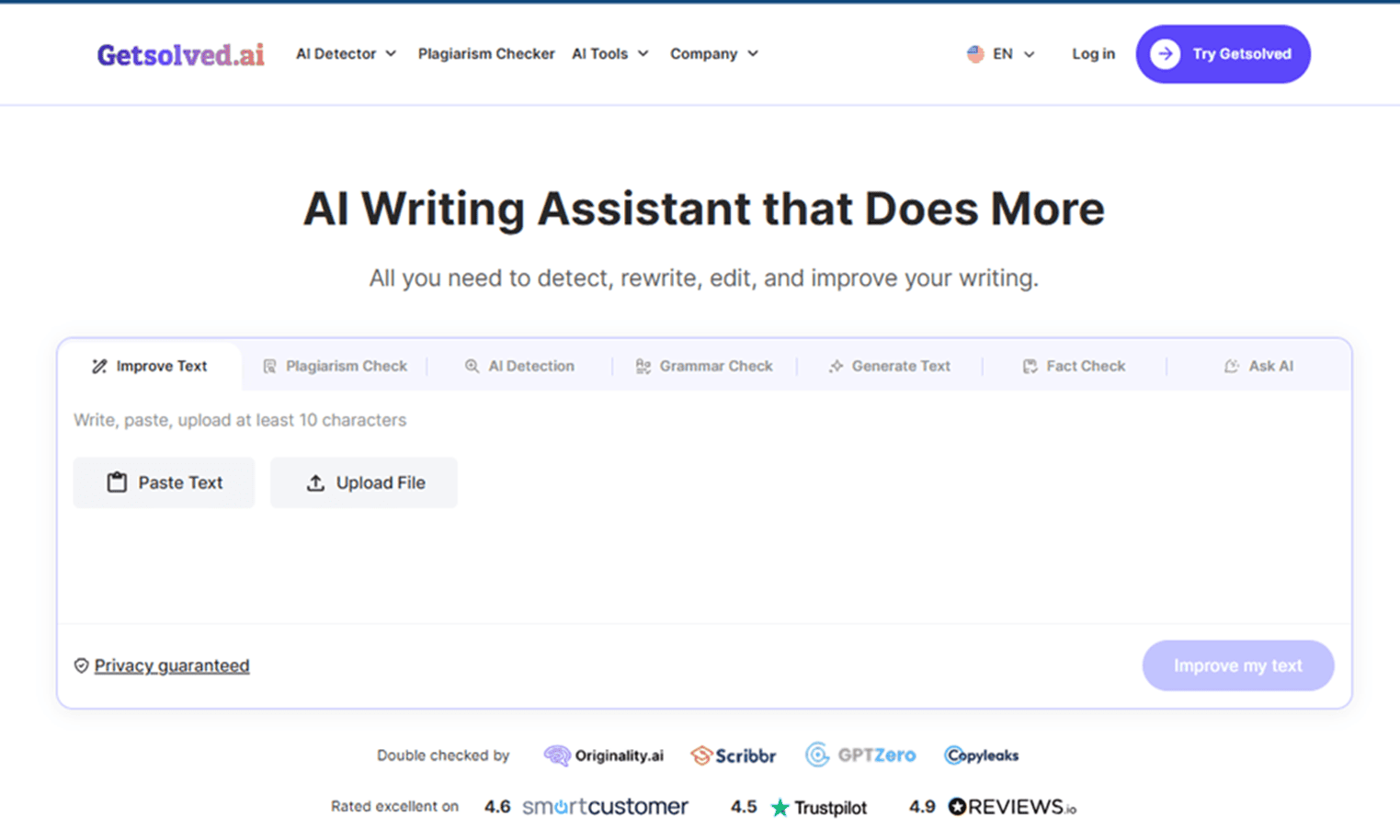
Getsolved is my first choice as a writing software because it doesn’t make you jump through apps. Everything you need is already there. I can generate a story with Getsolved, pass it through the fact-checker to avoid mistakes, and polish the final text with the rewriting tool. A favorite of mine is the AI humanizer because it makes the text easier to connect with.
Source:https://Getsolved.ai/
Authors can enjoy the following features when they use AI on Getsolved:
- Story generation based on a prompt
- Text style personalization and rewriting
- Grammar and punctuation cleanup
- Fact checker for unsupported claims
- Summarizer for synopses and lore tracking
Free tools for hobbyists are available to some extent. If you’re a serious writer who needs higher usage limits and detailed reports, there’s an initial 7-day $2 access plan, which renews at $39.99 (currently discounted at $19.99). An annual plan puts you at $479.88 per year ($95.88 after the discount), so you’ll pay $7.99/month.
| Pros | Cons |
|---|---|
| All generation and editing tools are available on the same platform | Workflow is not specifically for fiction |
| Multiple editing and fact-checking tools | It needs detailed prompts |
| The software reworks text while preserving the meaning | |
| User-friendly interface that makes it attractive to indie authors |
Verdict: If you’re looking for a writing platform that lets you generate and refine text, Getsolved is a good solution. It has numerous tools that make AI-assisted prose sound more natural, including humanizers and grammar checkers.
2. Sudowrite – Best for Serious Fiction Writing
Rating: 4.5/5
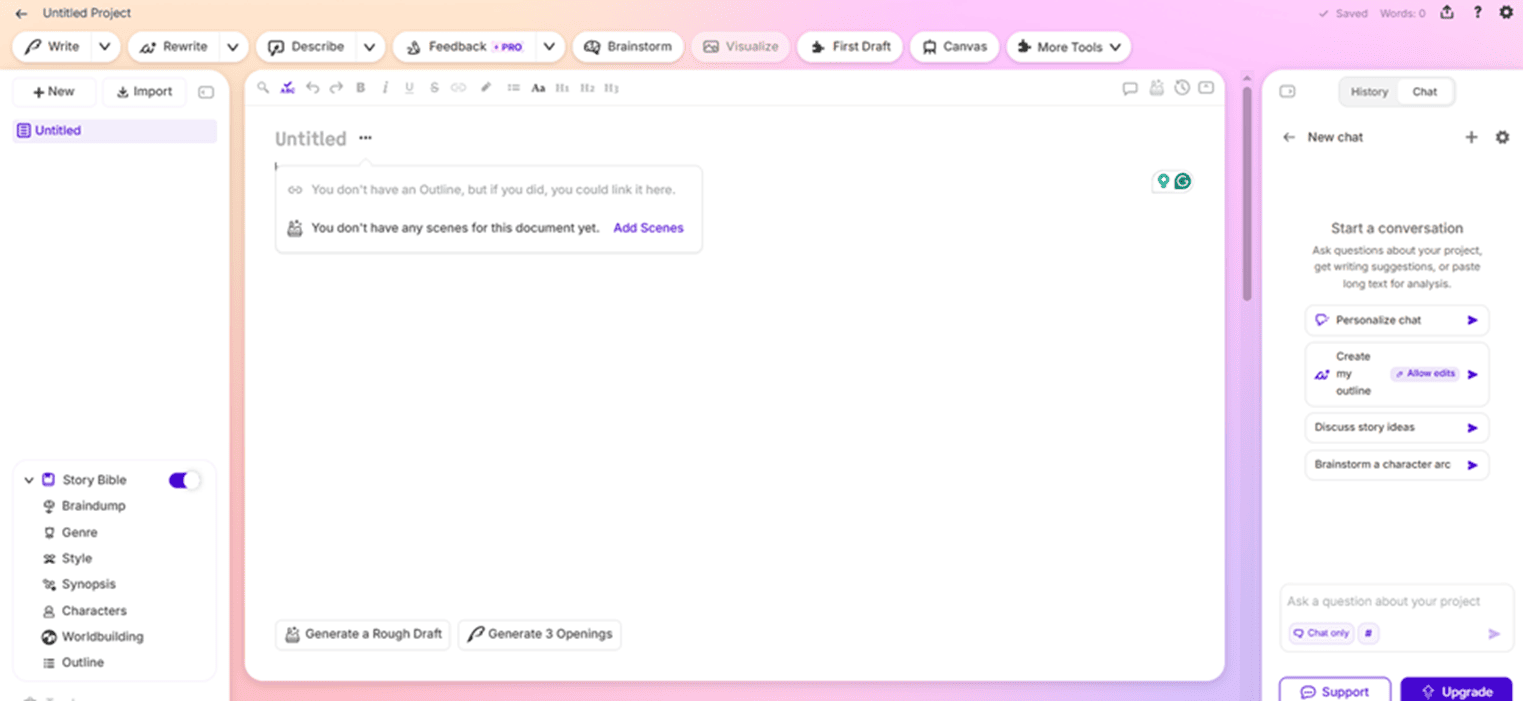
Tools like Sudowrite are my go-to when I’m serious about fiction. It’s a strong AI writing tool because it acts as a co-author, guiding you through the story. The “Describe” function lets me take a word and generate details that make it come to life.
Source:https://editor.sudowrite.com/app/project/qcpnWIkurVG1Xk8s4IVr#doc=Z2dxGo9KcEb6baH8tH73
Here’s a list of what you get with Sudowrite:
- “Story Bible” that acts as a central knowledge base
- Series folders to keep things organized
- “Describe” function for sensory details
- Quickchat and QuickEdit for fast modifications
The $10 “Hobby & Student” plan offers 225,000 credits per month to generate creative content. For aspiring writers with a higher influx of words or who write longer novels, I recommend the monthly $22 “Professional” plan. There is a free option that lets you test the site.
| Pros | Cons |
|---|---|
| Created specifically for fiction | Credit limit affects heavy users |
| Doesn’t focus on generic AI words | More expensive than other programs |
| Credit-based pricing is clear |
Verdict: Writers mostly engaging with short fiction may prefer Sudowrite because it offers that creative element and works for stories with significant lore.
3. ChatGPT – Best for Idea Brainstorming
Rating: 4.6/5
ChatGPT may not be my go-to for the actual writing part, but it’s the best tool to bounce ideas off on. Its generative style relies a bit too much on common tropes while being overly fancy with the words, but it makes you think through the issue. It’s an all-purpose chatbot that can assist you through every stage of writing, no matter if you want to expand a short passage with more detail or research a character type.

Source:https://chatgpt.com/
Here are some of the core functions of ChatGPT for fiction writers:
- Story Reference uploads directly to the chat
- Character creation and plot development
- Editing and rewriting of existing text
The free version of ChatGPT is an asset for indie writers looking for ideas, but the paid plan offers higher message limits when you upload story references.
| Pros | Cons |
|---|---|
| Flexible with different workflows | Wasn’t made for writing novels |
| Allows users to upload writing materials | The free variant can “forget” details after a while |
| Free version that makes it easy to experiment |
Verdict: ChatGPT is one of the most effective tools for fiction because it works for almost every use case out there. It’s convenient when you’re looking for an assistant for your novels and not a specialized application.
4. NovelCrafter – Best for Series and Long Novels
Rating: 4.5/5
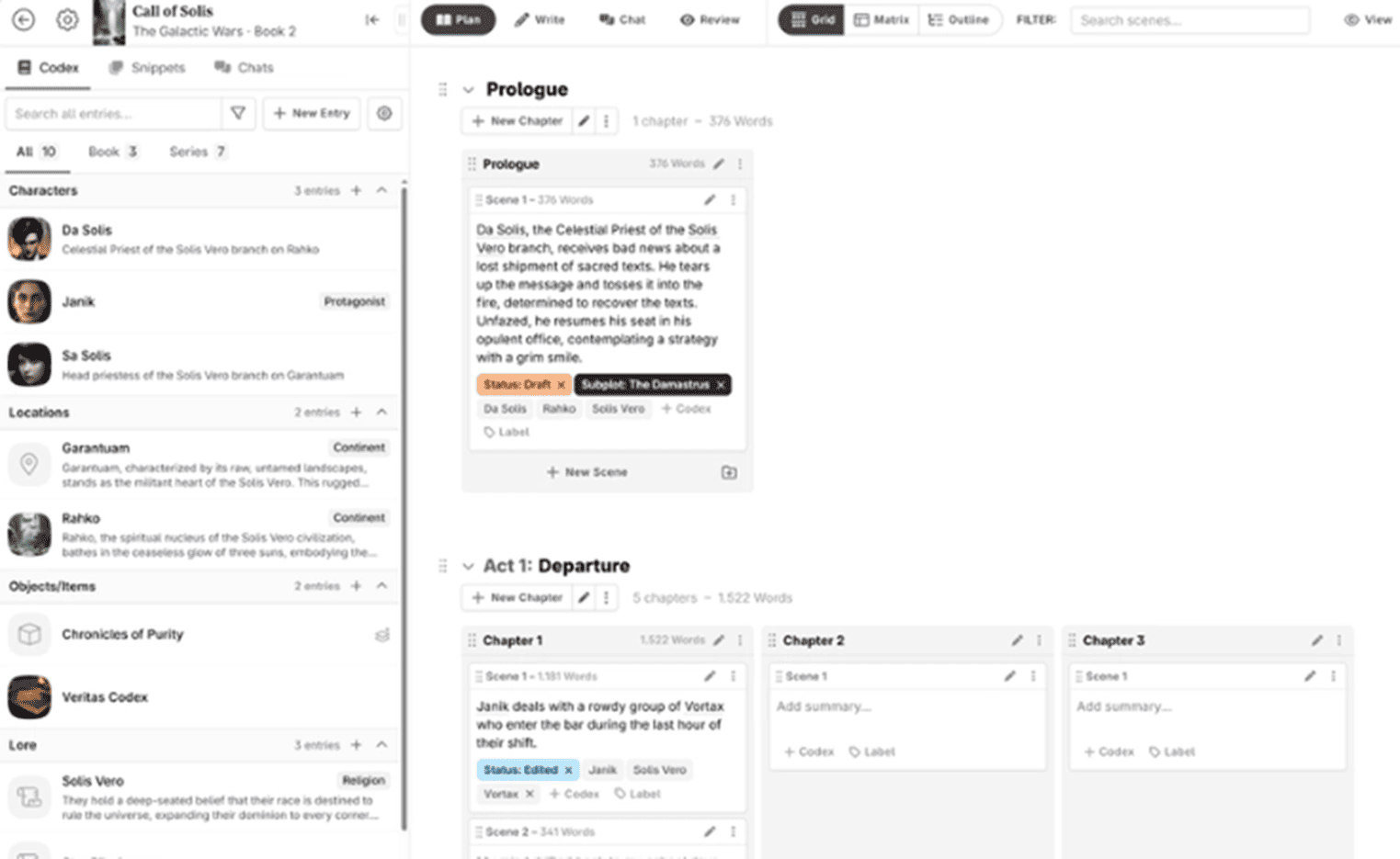
If you have the story in your mind and are confident in your writing skills, but you fall short when it comes to structure management, then NovelCrafter is a sound choice. The Codex is helpful for organizing recurring information, and you can choose which model handles the generation.
Source:https://www.novelcrafter.com/
Here are the organizational tools offered by NovelCrafter when working on a story idea:
- “The Codex” tracks characters, locations, items, and lore for the service to reference
- Story timeline for visible plot navigation
- Planning interface to organize books into acts, chapters, and scenes
Pricing starts at $4 per month, but the AI features begin with the $8 Hobbyist tier. Users have to bring their own model key. For the chat and advanced review features, consider the $14.84 Artisan plan.
| Pros | Cons |
|---|---|
| Multiple planning holes for catching inconsistencies | The extra features are hidden behind a membership |
| The Codex remembers character and story data long-term | You’ll have to dedicate time building and maintaining your Codex |
| Writers can choose how much AI assistance they want |
Verdict: If you’re planning a series or want to write a story that goes past 100,000 words, NovelCrafter works better than basic generators. It handles common issues with writing novels, offering continuous access to accumulated info and keeping the book organized.
5. DeepFiction – Best for Interactive Storytelling
Rating: 4.0/5
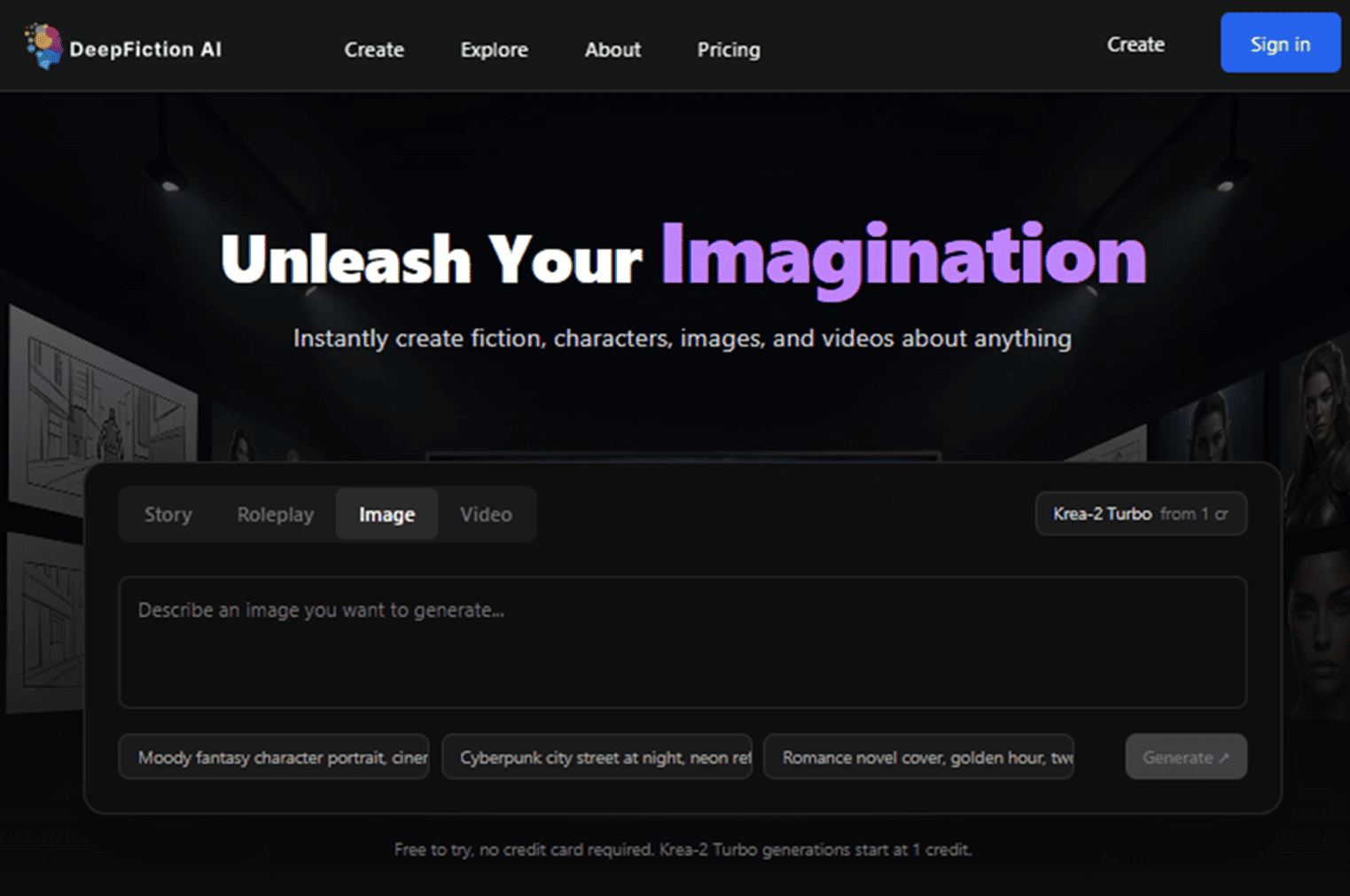
For those writing a novel and wanting a more detailed AI output, DeepFiction generates texts with an extra visual flair. Instead of focusing on classic techniques, this program helped me combine storytelling with visual generation. I work with it to explore fictional characters because it lets me see what I came up with.
Source:https://www.deepfiction.ai/
If you’re an author considering the DeepFiction writing app, here’s what a plan can offer:
- Multi-genre prose generation (from short texts to full novels)
- Custom character systems (up to three reusable characters)
- Granular control settings for tropes, themes, and specific conflicts
Like NovelCrafter, the prices for DeepFiction start at $4 per month, but there are multiple free AI writing tools to experiment with. If you want to generate higher-volume content without friction, the ProCreator and Studio plans offer more monthly and daily credits.
| Pros | Cons |
|---|---|
| It’s easy to guide and match the narrative | Limited number of credits in the free account |
| The generation process is fast and intuitive | Occasionally produces rigid structures |
| Well-suited for intense themes such as dark fantasy, horror, and thriller |
Verdict: I wouldn’t use DeepFiction to write a 100,000-word novel, but it is my top software for experimenting with scenery and characters. The way it combines text with visuals helps me write more realistic books.
6. Claude – Best for Story Development and Structure
Rating: 4.6/5
If you are looking for a general-purpose Artificial Intelligence program to write a book and get some guidance, Claude can prove helpful. It works when you have the full story already written and want to improve issues with pacing, writing, dialogue, or structure.Many Redditors recommend Claude because it finds plot holes, but suggest getting the Pro variant to bypass usage limits.

Source:https://claude.ai/new
Here’s what authors can use if they employ Claude as their tool for fiction writing:
- Artifacts for interactive text to compare story elements
- Story creation assistance and brainstorming
- Text rewriting and grammar checking
Claude has a free version, but the number of messages varies by model, prompt length, files, and more. Unless you want to regularly start fresh chats, the $20 monthly plan is more convenient. If you get the annual subscription, the monthly price goes down to $17.
| Pros | Cons |
|---|---|
| Writing style that feels creative and natural | It’s not completely free to use all features |
| Large document input that’s suitable for book series | You can’t continue writing without additional prompting |
| Good for structural feedback |
Verdict: Claude works well if you want to write a book, but you need it more for editing purposes. While it can generate text, the content feels stiff because it’s not fiction-oriented.
7. Inkfluence AI – Best for eBook Publication
Rating: 4.0/5
Inkfluence is a reliable option because it’s a purpose-built, multifunctional platform that handles the entire book creation process. You can use it to generate a complete, publication-ready book from one prompt or build out individual story paragraphs. I utilize it for organizing chapters, creating covers, editing content, and exporting ebooks in multiple formats.
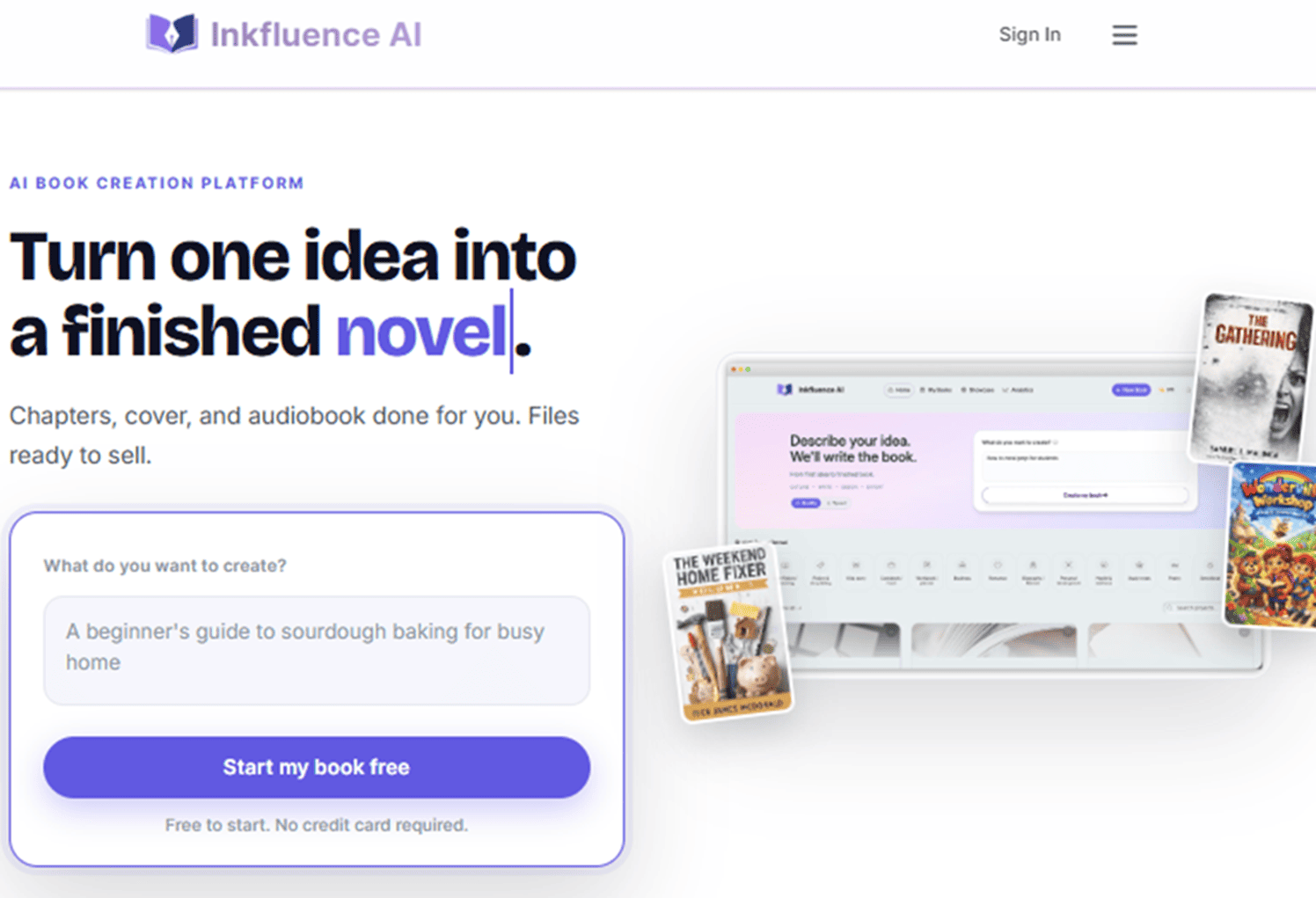
Source:https://www.inkfluenceai.com/
The core writing and continuity features of Inkfluence include the following:
- Persistent Story Bible that locks character data
- Inline AI passage editing function
- Multi-format export into various publishing formats
At $9.99, the Creator plan is the cheapest one. You can get more from your generated story if you use the higher-tier plans, as you get more chapters. If you are a hobbyist, the free variant gives you 5 chapters every month.
| Pros | Cons |
|---|---|
| Supports multiple ebook formats | The first text may need more human editing |
| The rich text editor saves time and adds creative elements | Not suitable for research-heavy book writing |
| Can generate a full manuscript within minutes |
Verdict: Inkfluence is a good choice if you want to publish ebooks, but your writing skills are not stellar. Its versatile export makes it one of the most effective AI content creation tools for other formats.
8. Squibler – Best for Full Manuscripts
Rating: 3.5/5
If you’re on a tight deadline and don’t have time to generate scenes or chapters as you go, Squibler can handle the full manuscript. I liked that you can create images and short video sequences within your writing space, bringing the characters and items to life.
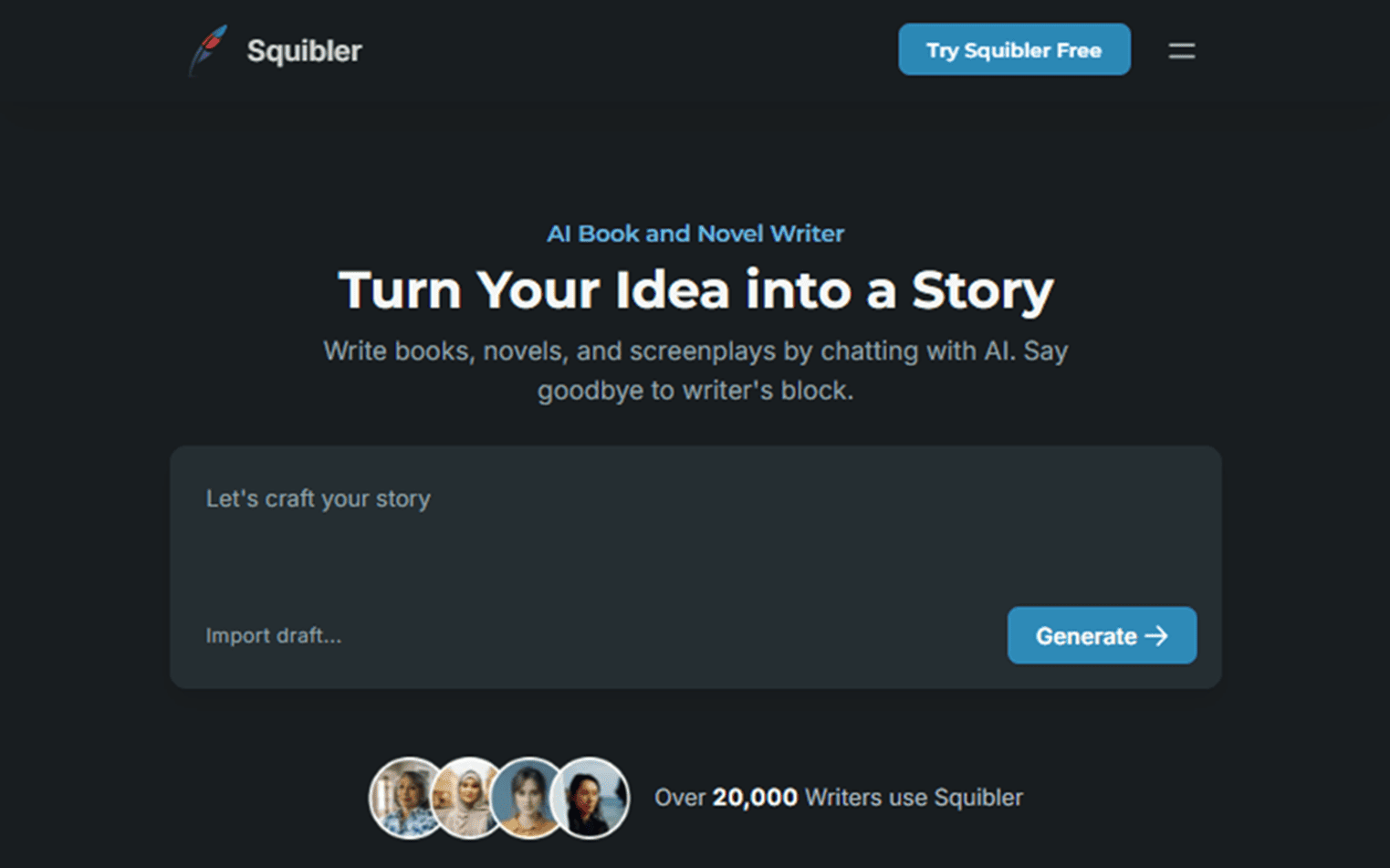
Source:https://www.squibler.io/
Here are the features you can benefit from to write your story:
- Story elements management to define and track characters
- Full-length AI-powered generation for scenes, chapters, or full manuscripts
- Project organization and version control
Squibler’s free version gives you 1,000 credits per month. If you’re writing full-time and publish multiple books a year, I’d suggest the Plus plan. Authors can opt for the monthly standalone price of $29,99, but if you go for annual billing, the cost goes down to $15.83 (currently at a discount from $29.99).
| Pros | Cons |
|---|---|
| Effective for mapping out a logical flow | Full-length text generation rapidly burns through credits |
| Can be used to edit and rework an existing manuscript | Control over the workflow is limited |
| The visual elements make the writing feel more dynamic |
Verdict: Choose Squibler if you need writing support for your first draft. I wouldn’t publish that text, but it gives you a starting point for you to work on.
9. NovelAI – Best for Plotting and AI Fiction
Rating: 4.3/5
NovelAI is a good option if you are a science fiction writer who enjoys world-building. I like that it lets you control how the machine approaches the fictional world, acting as an assistant. The Lorebook can be used when you have recurring characters.
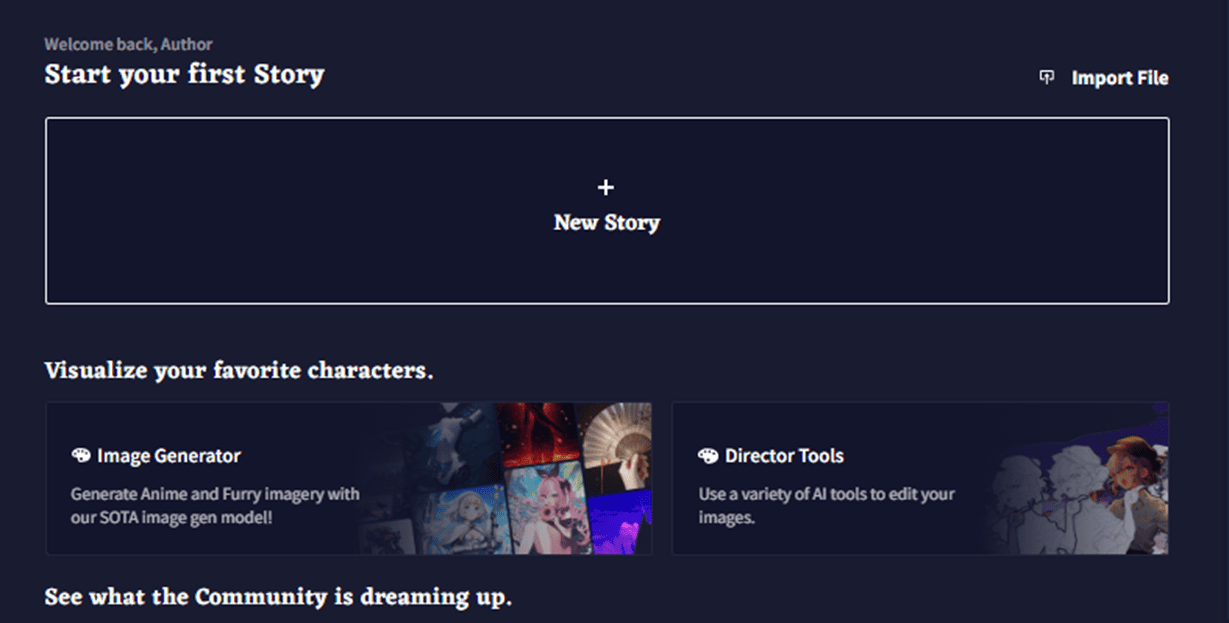
Source:https://novelai.net/stories
Some of the main features include the following:
- Long-form story and prose generation
- Context management folders
- Lorebook for character info
There’s a free plan that writers can use, as well as three paid subscriptions ranging from $10 to $25 per month. The free version offers 50 text generations, after which writers must pick a paid plan.
| Pros | Cons |
|---|---|
| Gives a strong basis for genre fiction | The interface is a bit complex |
| Suitable for world-building | Less useful if you need editing |
| Comes with affordable paid plans |
Verdict: I’d choose NovelAI if you have a more complex fictional universe ahead of you and you need a program capable of keeping track.
10. Rytr – Best for Short AI Stories
Rating: 4.0/5
Rytr is not as complex as other tools, but it’s a decent solution if you are on a budget. I find it good for short stories and bouncing ideas off an AI agent. I like the document writing feature because it lets me store the edited texts on the same platform.
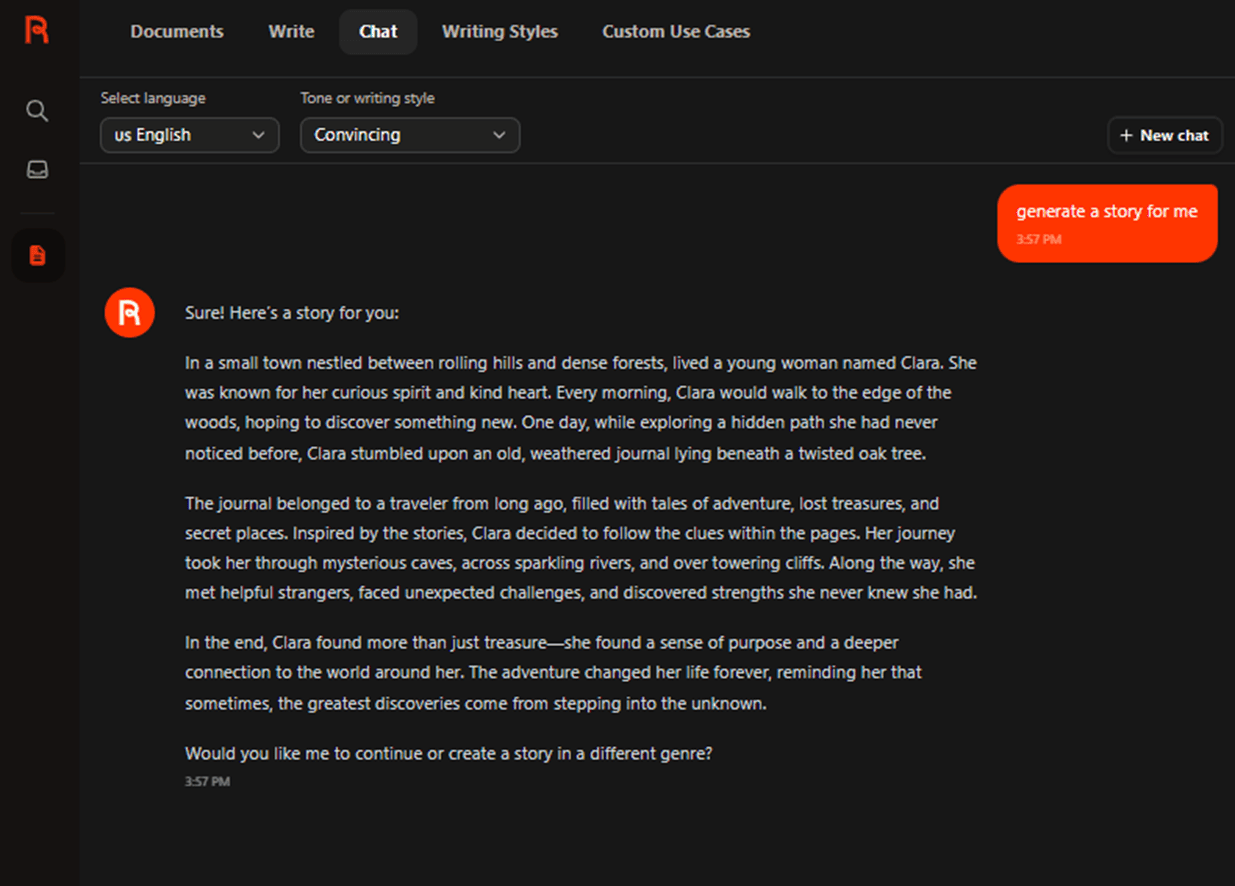
Source:https://app.rytr.me/
Here are some features I enjoyed about Rytr:
- Plot and story generator
- Support for 35+ languages
- Preset and custom tones
The free option limits the number of characters you can generate per month, but there’s an $8/month “Unlimited” plan and a $29/month “Premium” plan. Monthly costs are $7.50/month and $24.16/month, respectively; you can choose the yearly plan to save some money. The 35+ languages are limited to the Premium plan.
| Pros | Cons |
|---|---|
| Affordable compared to other generators | It’s not made for novel writing |
| Generous free version | Not that many advanced features |
| Doesn’t have a steep learning curve |
Verdict: If you only need the occasional help to write a short story, Rytr can be a decent choice. I find it effective for students on a budget.
The Bottom Line
If you’re looking for a good Artificial Intelligence program to write a book, the answer depends on what you need from it. For an assistant that can generate and edit text, one of the best AI tools for writing overall is Getsolved. In case you just need something to generate some ideas, ChatGPT and Claude can be helpful. Many writers use Sudowrite and Inkfluence alongside Getsolved for better coverage.